
Last updated November 14, 2026
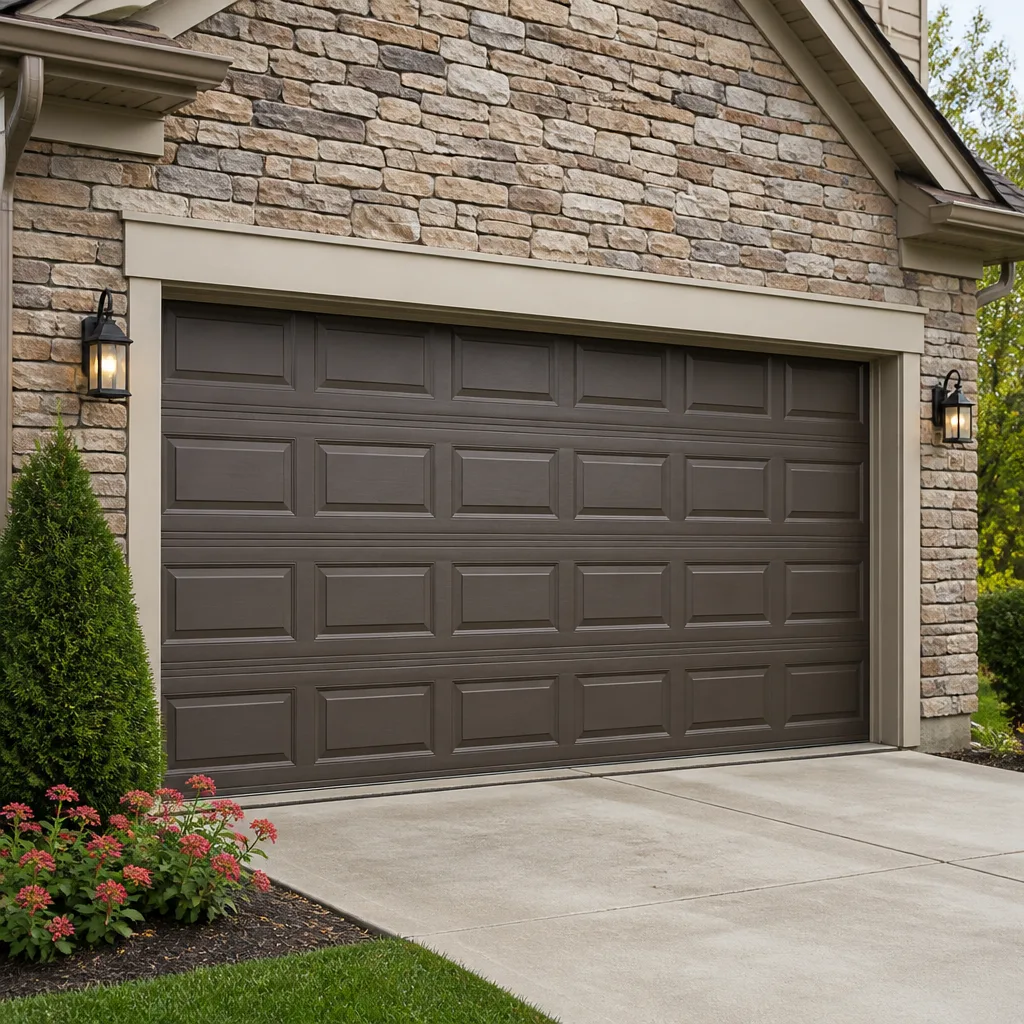 Raised-panel steel
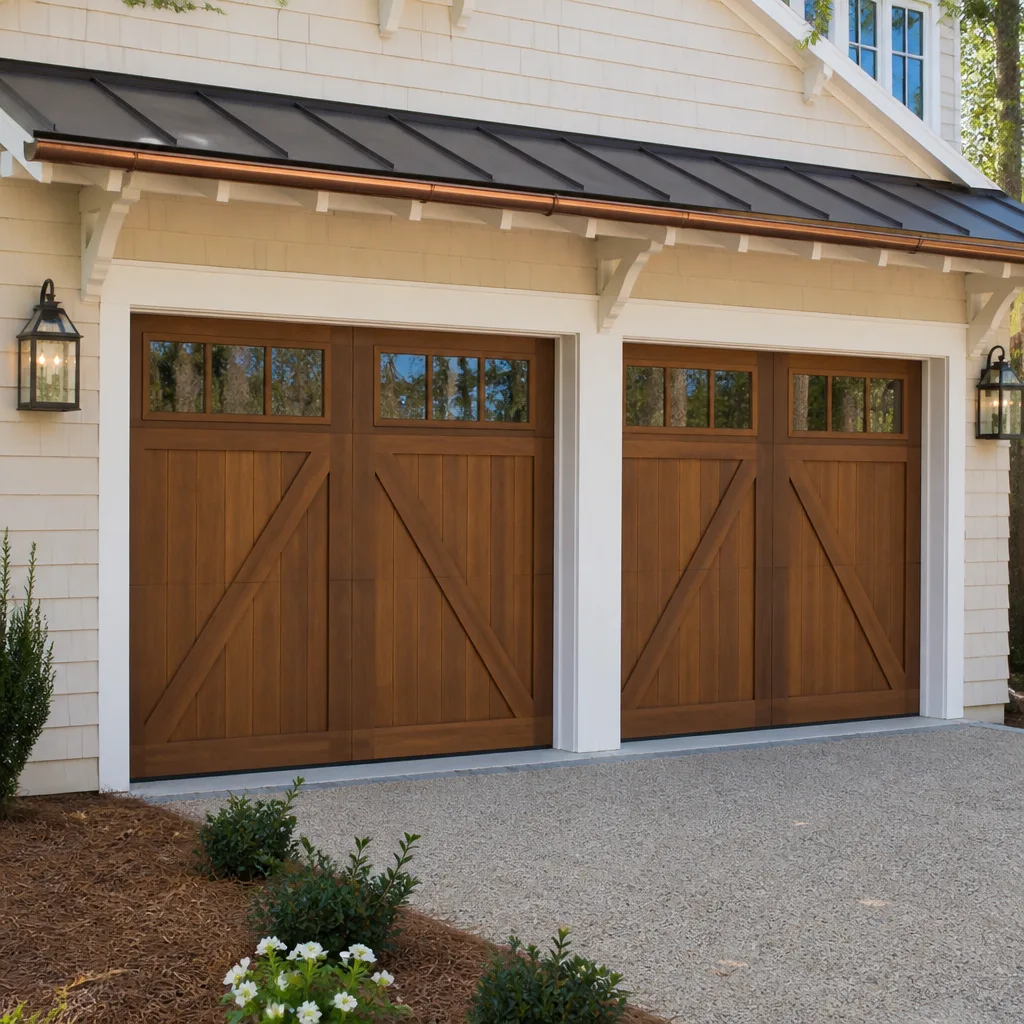 Carriage house
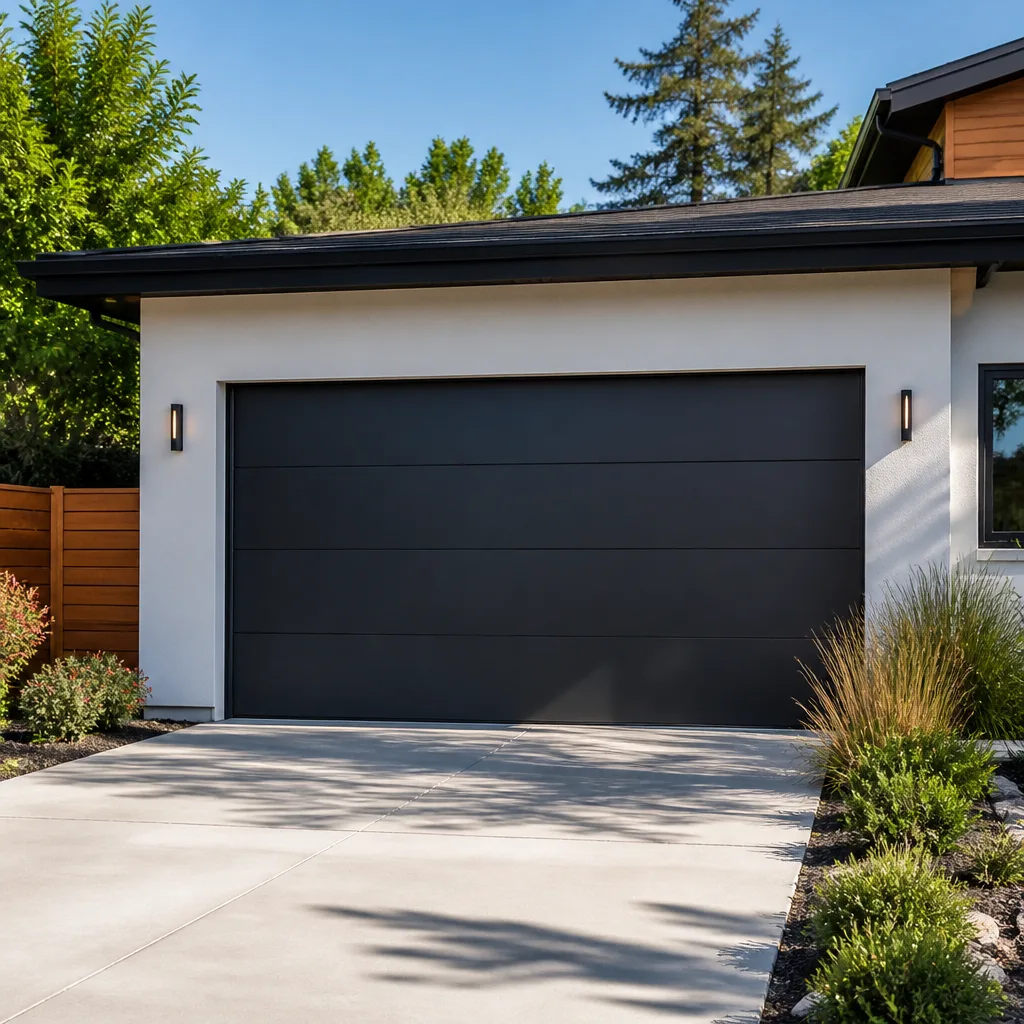 Modern flush
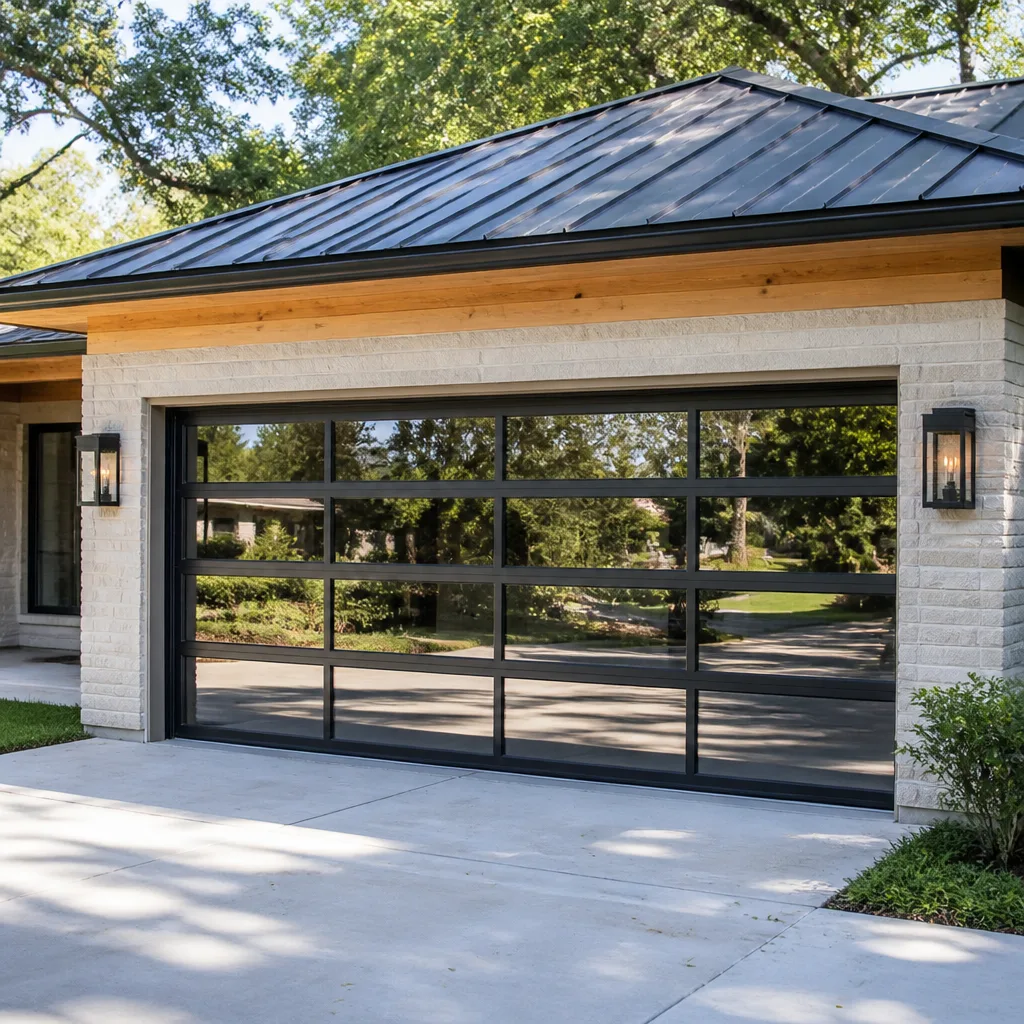 Full-view glass
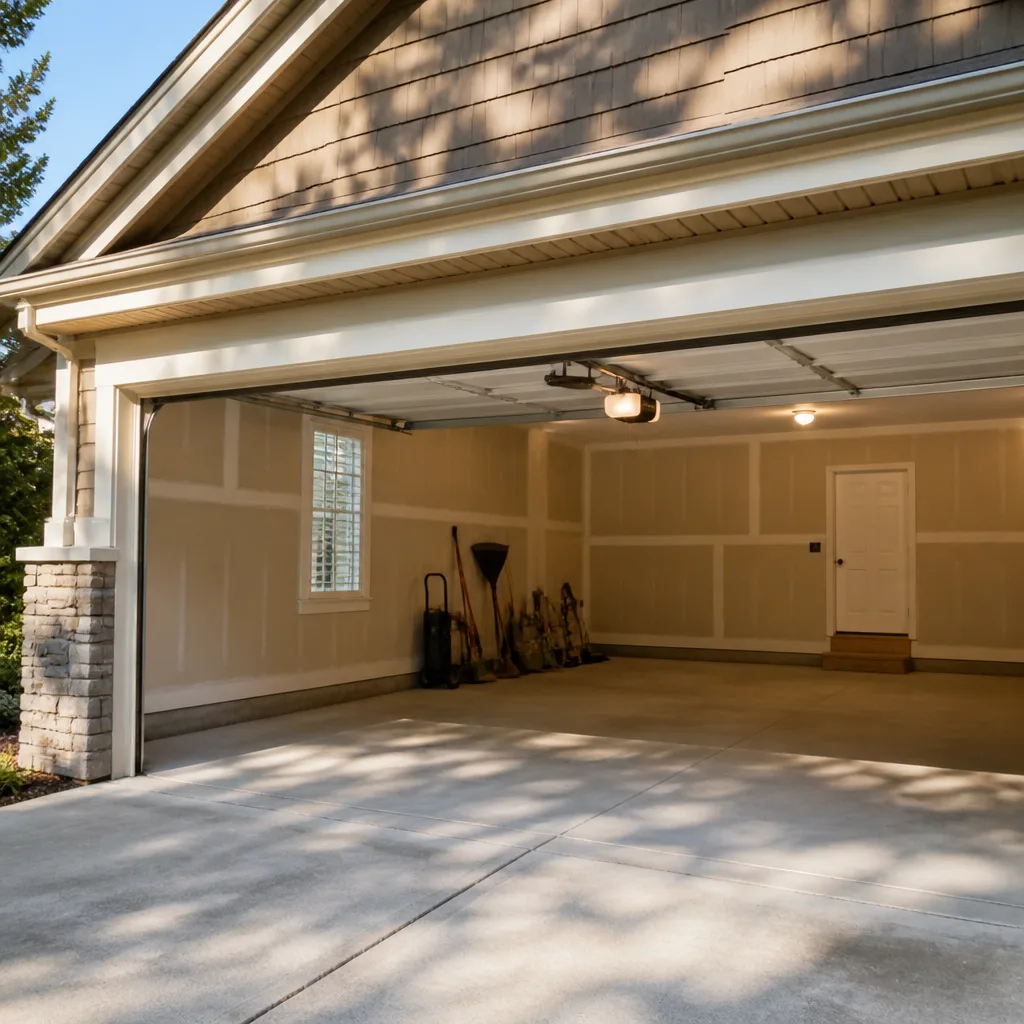 LiftMaster openers
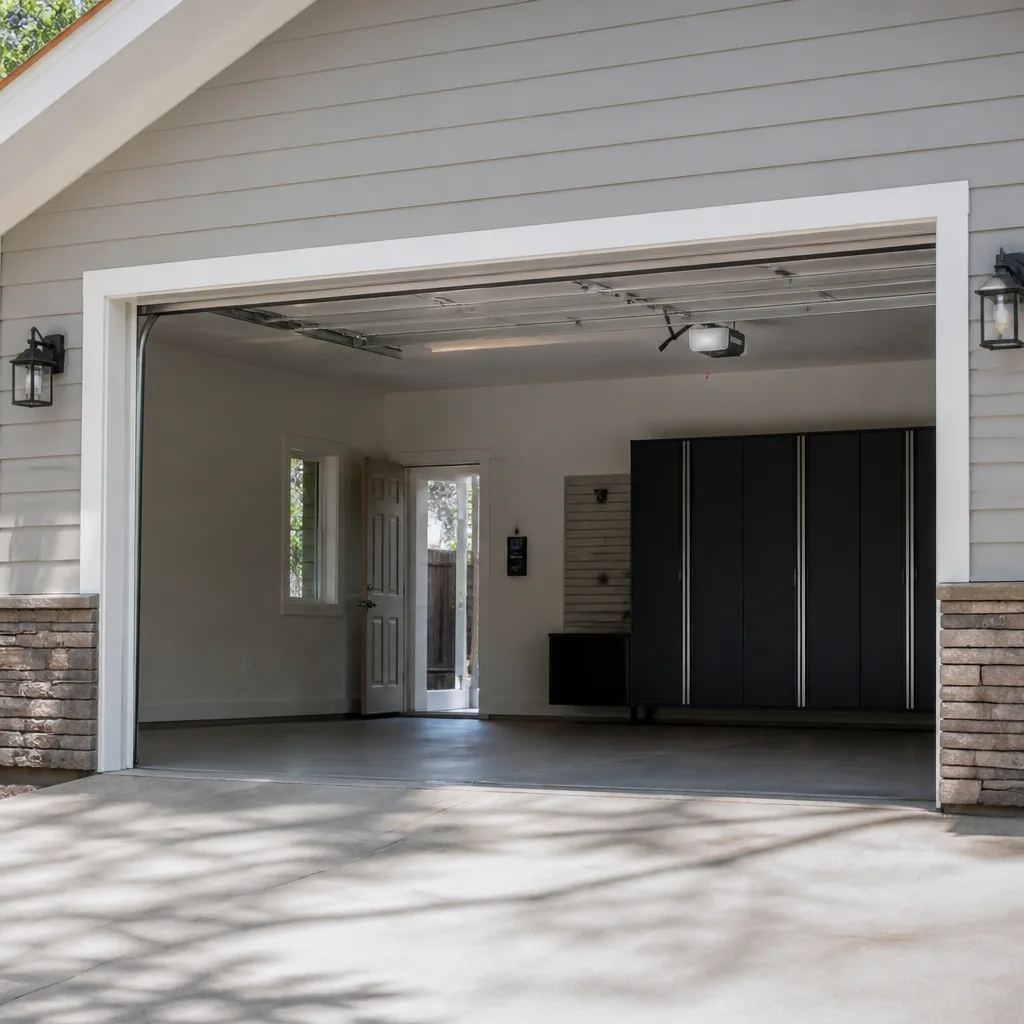 Chamberlain openers
Full 25-point door and opener safety check with every visit - springs, cables, rollers, tracks, and your LiftMaster or Chamberlain opener included
You get a price before we start. It does not change when the truck arrives.
Get your free estimateDIY vs Professional Garage Door: The Washington Homeowner’s Decision Guide
Most garage door advice online treats the DIY question as a matter of confidence. If you’re handy, tackle it; if you’re not, hire someone. That framing misses the point in Washington, where the housing stock itself changes the math. A row house in Capitol Hill with a narrow alley approach, a converted carriage house with a low header, a 1920s bungalow in Petworth where the door has settled with the foundation – these are not the same job as a suburban two-car garage with a level concrete apron and ten feet of clearance. What’s routine elsewhere can be genuinely dangerous or legally messy here. This guide draws the line task by task, explains which work needs a professional in Washington and which doesn’t, and shows you how to decide before you pick up a wrench.
Quick Answer
In Washington, DC, a competent homeowner can safely handle routine maintenance like lubricating tracks and rollers, aligning safety sensors, reprogramming a remote, and replacing a bottom weatherstrip seal. Everything involving torsion springs, cables, and the door’s balance system belongs with a trained garage door technician, and any work that alters the structure or adds an opener should be checked against DC permit rules before you start. The dividing line isn’t skill level. It’s torque, code, and what your home sale will look like years from now.
Styles & brands we work with
- Raised-panel steel
- Carriage house
- Modern flush
- Full-view glass
- LiftMaster openers
- Chamberlain openers
Table of Contents
- Why This Decision Is Different in Washington
- DIY-Safe Tasks: A Task-by-Task Breakdown
- The Torsion Spring Line (And Why You Should Not Cross It)
- DC Permit Implications of DIY Garage Door Work
- Tool and Parts Reality for DC Homeowners
- The False Savings Calculation
- How to Prepare Before You Decide
- What a Professional Visit Actually Looks Like
Why This Decision Is Different in Washington
The standard DIY-versus-pro conversation assumes a garage door sits at the end of a driveway with nothing around it. In much of Washington, DC, that’s not the setup. Row houses put the garage tight against a property line. Alleys are narrow, sometimes barely wide enough for a ladder to sit flat. A door that opens fine but won’t fully retract without scraping a wall doesn’t just look bad – it stresses the panel joints every time it cycles, and the panels on older doors are often the original stamped steel with a taper that was never designed to flex that way.
Housing age matters too. A substantial share of Washington’s residential housing predates 1950, and garage doors on those homes have been retrofitted, rehung, had openers bolted onto old wood headers, or been widened when a former carriage house got converted. When a technician opens a door that’s been touched by four different owners across sixty years, the surprises aren’t hypothetical. We’ve learned to look at the header, the jamb, and the track’s attachment points before we even touch the springs.
Then there’s climate. Washington summers are humid, and the seasonal swing from wet to dry moves wood and expands metal. Bottom seals crack earlier here than homeowners expect. Steel panels near the ground show rust faster after a wet spring. Track fasteners work loose in older framing. None of this makes DIY impossible – it makes the threshold between “maintenance” and “structural fix” arrive sooner than it would in a drier climate.
The result is a city where the right answer varies block by block. A homeowner in Capitol Hill dealing with a tight alley and a steel door faces different constraints than a homeowner in Brookland with a detached garage and a wider approach. There is no single “DC rule” for the DIY boundary. There are categories of work, and each has its own logic.
DIY-Safe Tasks: A Task-by-Task Breakdown
Here’s where the honest line falls.
Safe for a competent homeowner:
- Lubrication. Tracks, rollers, hinges, and bearing plates. Use a garage-door-specific lubricant, not WD-40 on the moving parts, and avoid spraying the tracks themselves – the vertical track needs to stay clean, not slick.
- Safety sensor alignment. If the door reverses immediately after closing, the sensors at the bottom of the tracks are the first thing to check. Wipe the lenses, check that the small LED on each unit is solid, and nudge them until the door closes clean.
- Remote and keypad reprogramming. Remotes drift, replacement remotes need to pair, and keypads need a fresh code every so often for security. This is a manual-and-patience job, not a mechanical one.
- Bottom weatherstrip seal replacement. A cracked or hardening bottom seal lets water and cold air in and is often the source of a draft you feel rather than see. New seals slide or snap into the bottom retainer and are among the most forgiving jobs on the door.
- Visual inspection. Look, listen, and note. This is free and it’s what you should do quarterly.
Not safe for a homeowner, and we mean that categorically:
- Torsion spring adjustment, replacement, or removal.
- Extension spring replacement.
- Cable replacement or reattachment.
- Track replacement or realignment when the door has come out of the track.
- Panel replacement on a door with a broken spring or a sagging bottom section.
- Opener replacement or any work that involves rewiring high-voltage connections to the opener.
- Any adjustment involving the door’s balance or counterweight system.
The DIY-safe items are the ones where a mistake produces an inconvenience: a door that doesn’t close, a remote that doesn’t work, a small draft that persists. The prohibited list is where a mistake produces injury. That’s the actual line, not confidence and not handiness.
The Torsion Spring Line (And Why You Should Not Cross It)
Here’s the mechanical reality. A torsion spring is a coiled steel bar, typically mounted above the door, that stores the energy required to lift the door’s full weight. On a standard residential door, that stored energy is commonly in the range of 150 pounds or more of torque at rest. When you see a technician working on a spring, the door is fully closed with the spring in a relaxed position – but the spring is also wound to a specific count of turns that precisely balances the door’s weight. One quarter-turn off in either direction and the door becomes dangerous, not just annoying.
Why is adjusting it fatal-tier dangerous and not just hard?
- The spring is under tension even when the door is closed and the opener is disconnected. It’s never truly “off” unless it’s been properly unwound.
- The tools used to wind and unwind a torsion spring are steel bars inserted into the winding cone – and the spring can spin the bar free with enough force to break bones.
- Cables are under tension whenever the door is closed. A cable that’s cut or that snaps will whip across the garage with the energy of the spring behind it.
- Even a “gentle” adjustment that feels fine during the job can produce a failure weeks later when the spring’s material fatigues at a stress point.
- In Washington, the tight alley and close-quarter garage geometry narrow the space you have to work in, which means less clearance and less chance of catching a falling bar.
This isn’t a liability disclaimer. It’s the physics of a device that holds a residential door’s full weight in a coiled spring the diameter of a coffee cup. A homeowner can absolutely learn to identify a broken spring: the door feels heavy on one side, the garage has a clear gap above the door, and sometimes there’s a small dark mark near the winding cone where the spring snapped. Identifying it is fine. Servicing it is not.
Related reading: what our garage door repair service looks like when the spring is the problem.
DC Permit Implications of DIY Garage Door Work
Permits aren’t the first thing most homeowners think about when they replace a door or add an opener, but in Washington, DC, they matter at resale time. Title searches in DC do turn up open permits, and unresolved permits can complicate or delay a closing.
The safe rule is: when the work is routine repair or cosmetic replacement of a non-structural component, permit requirements are usually minimal or absent. When the work touches anything structural, adds new electrical service, or involves enlarging or altering a door opening, it’s a different story.
Categories where you should call the DC Department of Buildings and Permits before starting:
- Enlarging or widening a garage door opening.
- Adding a new opener where there wasn’t one, if it requires running new electrical service.
- Replacing or modifying a structural header above the door.
- Converting a former carriage house or carriage entry to a garage door.
- Any work on a garage that is attached to the primary structure and involves modifying a fire-rated wall.
Categories that usually don’t require a permit:
- Replacing a door on a preexisting opening with a same-size or same-weight door.
- Repairing or replacing components within an existing opener system where no new electrical service is being added.
- Replacing weather seals, bottom seals, rollers, and hinges.
We recommend asking the DC Department of Buildings and Permits directly when you’re unsure. The permitting staff there will tell you whether your specific door situation requires a permit, and getting that answer in writing before you start is worth the phone call. It saves a headache at the title search five or ten years from now.
Tool and Parts Reality for DC Homeowners
Here’s what a homeowner in Washington can actually walk into the hardware store and buy for a garage door job.
Usually available at any hardware store or big-box retailer:
- Bottom weatherstrip seals for common door widths.
- Garage-door-specific lubricant.
- Standard steel hinges and nylon rollers.
- Replacement remotes for the common brands.
- Small hand tools, adjustable wrenches, screwdriver sets.
Usually not available without a trade account or special order:
- Winding bars in the correct diameter for common torsion spring sizes.
- Cable sets sized to a specific door weight.
- Torsion springs with matched wire gauge and inside diameter.
- Replacement safety sensors for older openers (the connectors are often discontinued).
- Rolled steel or aluminum panels in the exact color and profile.
This gap is where DIY projects bleed time. A homeowner who orders the wrong spring – wrong wire gauge, wrong inside diameter, wrong wound direction – doesn’t just lose money. They lose a weekend and end up calling us anyway with a spring in the box that has to be returned. Washington- area trade suppliers don’t sell to walk-in customers for most door components, so what looks like a simple order online usually turns into a multi-day wait and a wrong part arriving.
Tool rentals are also uncooperative. The correct winding bars in the correct diameter and length aren’t a rental item at most DC-area suppliers. And a rental torque wrench used with a bar that’s the wrong diameter is more dangerous than no tool.
Related reading: our garage door opener repair service covers the parts issues that come up when a smart opener needs a component that’s no longer stocked anywhere.
The False Savings Calculation
A garage door repair that looks cheap on paper often isn’t. Here’s the math most DIY-versus-pro guides don’t show you.
Take a job a confident homeowner tries to do themselves: replacing a torsion spring. The parts cost may run fifty dollars. The winding bars, ordered for a specific spring size, run more. Then there’s the first trip to the hardware store for the spring, the discovery it’s the wrong size, the second trip or the online order, the wait for delivery, and the third trip when a tool was missing. Add three weekends of partial progress during which the garage doesn’t open. Add the rental on a tool that turns out not to fit. Add the part that arrives wrong and needs to go back.
Against that, compare what a Stratford Garage Door Service visit typically looks like. We arrive with the parts in the truck for the most common spring and cable sizes. The technician identifies the spring, confirms the door weight, replaces it with a matched part, tensions the system to the correct number of turns, tests the balance and the safety reverse, and the door is operating normally in a couple of hours. Single visit. Written price agreed before any work starts. Cash and time both preserved.
The pattern holds for other jobs. A broken safety sensor that the neighborhood hardware store didn’t have in stock because the opener is ten years old? We carry the common replacements and we’ll tell you upfront if yours needs an order. A bottom seal that wouldn’t stay in the retainer because the retainer itself is worn? We’re the ones who ask the right follow-up question.
The real cost of a DIY attempt is not the price of the part. It’s the price of the part, plus the second part, plus the weekends, plus what happens when the door’s balance is off and the whole system eats itself over the following six months. A door that runs out of balance wears its rollers, its hinges, and eventually its cables faster than a door that runs correctly. That’s the cost nobody puts in the DIY blog post.
How to Prepare Before You Decide
If you’re going to try a DIY-safe task, set yourself up the right way. Here’s the sequence we recommend to any homeowner who calls us after a failed attempt.
- Locate the door’s manual and the opener’s manual. The opener model number is almost always inside the unit – laptop-shaped on LiftMaster and Chamberlain models, small label on Genie. The door’s make and model is sometimes stamped on the bottom panel edge or printed on a label.
- Write down the model numbers. Every call starts faster when we know the brand and model. This is a big part of why we learn the specific quirks of Amarr, Wayne Dalton, Craftsman, Raynor, and the other leading brands – it saves a diagnostic step before we arrive.
- Photograph the current failure. A photo of the gap over the door, the sensor LED, or the cable end tells a technician more than a five-sentence description.
- Clear the space in front of the door and along both sides. In tight Washington garages, that means moving the recycling bin, the ladder, and anything stored along the walls. This is a safety requirement for us and for you.
- Note whether the door is level. Stand about ten feet back and look at the bottom of the door. If one side is higher than the other, the door is likely out of balance and the job has crossed from maintenance into repair.
- Disconnect the opener (pull the red emergency release) only if you can safely lift the door by hand. If the door won’t lift with one hand, the spring is the problem and the job is a professional one.
Preparing this way costs fifteen minutes. It also tells you, before you start, whether the job is yours to handle or someone else’s. Most of the calls we get from Washington homeowners begin with “I thought I could do it myself, but…” – and the fifteen minutes of preparation would have told them so.
What a Professional Visit Actually Looks Like
A garage door service call follows a predictable shape. That predictability is what makes it useful to a homeowner who’s trying to decide whether to call.
We look at three things first: the door, the opener, and the spring system. We observe the door’s operation. We check the balance point. We note any panel damage, any rust at the bottom edge, and any evidence of the door having been retrofitted or modified in the past. Then we ask what’s actually happening – what the door does that it didn’t do before, how long ago it started, and whether anything changed recently.
For the diagnosis to be fast and accurate, familiarity with the specific brand matters. A LiftMaster opener and a Chamberlain opener share a lot of DNA but fail in different ways. A Wayne Dalton door’s track fastening pattern isn’t identical to an Amarr door’s. Knowing the differences before arriving means the technician shows up with the right parts more often.
The written estimate comes next. Every job at Stratford Garage Door Service starts with a written price – no work begins until the price is agreed. The price reflects what the job actually is, not a sales call. If the door’s fine and the opener just needs a remote paired, we tell you. If the spring needs replacing, we give you the number and you decide. Cash and capex decisions are yours. Our job is to be the accurate one.
The work itself rarely takes long when the parts are on the truck. A torsion spring replacement, opener repair, or a full rebalance typically runs a couple of hours. A full door replacement is a scheduled visit, not same-day. If you’re in Washington and want to know what your situation involves before deciding whether to call, call (844) 372-0752. We answer 24/7. Fast dispatch from 7am to 7pm, Sunday through Friday.
Common Mistakes to Avoid
- Adjusting a torsion spring without the door being properly secured. The door must be fully closed and the spring unwound to a known position before any winding bar goes in. Most homeowner injuries happen when someone tries a “small adjustment” on a partially wound spring. There is no small adjustment.
- Assuming the door is “off” when the opener is disconnected. The emergency release disconnects the opener, not the spring. A door that was lifting the wrong way is still under tension. This is the most dangerous misconception we run into in Washington.
- Replacing a bottom seal without checking the retainer. If the retainer itself is worn or bent, a new seal will go in and immediately start to peel. In a wet Washington spring, a leaking retainer lets water creep under the door and into the garage floor.
- Running an opener on a door with a broken spring. The opener is designed to lift a door that the spring has already helped. With the spring broken, the opener is lifting the door’s full weight, and it won’t last long. This is a common reason a small repair turns into a full opener replacement.
- Skipping the DC permit question. Homeowners who replace a door or add an opener without asking the DC Department of Buildings and Permits often discover the issue at resale. Title searches do flag open permits in DC, and that’s a slow, expensive fix.
- Ordering a spring online without matching the door’s weight. A spring is matched to the door’s exact weight and the number of turns the door needs. An off-the-shelf order frequently arrives the wrong wire gauge, wrong inside diameter, or wrong wound direction, and returns are slow.
- Using WD-40 on the tracks. Tracks need to be clean, not slick. Lubricating them attracts grit, accelerates roller wear, and creates noise. Use garage-door-specific lube on the moving parts, not the tracks.
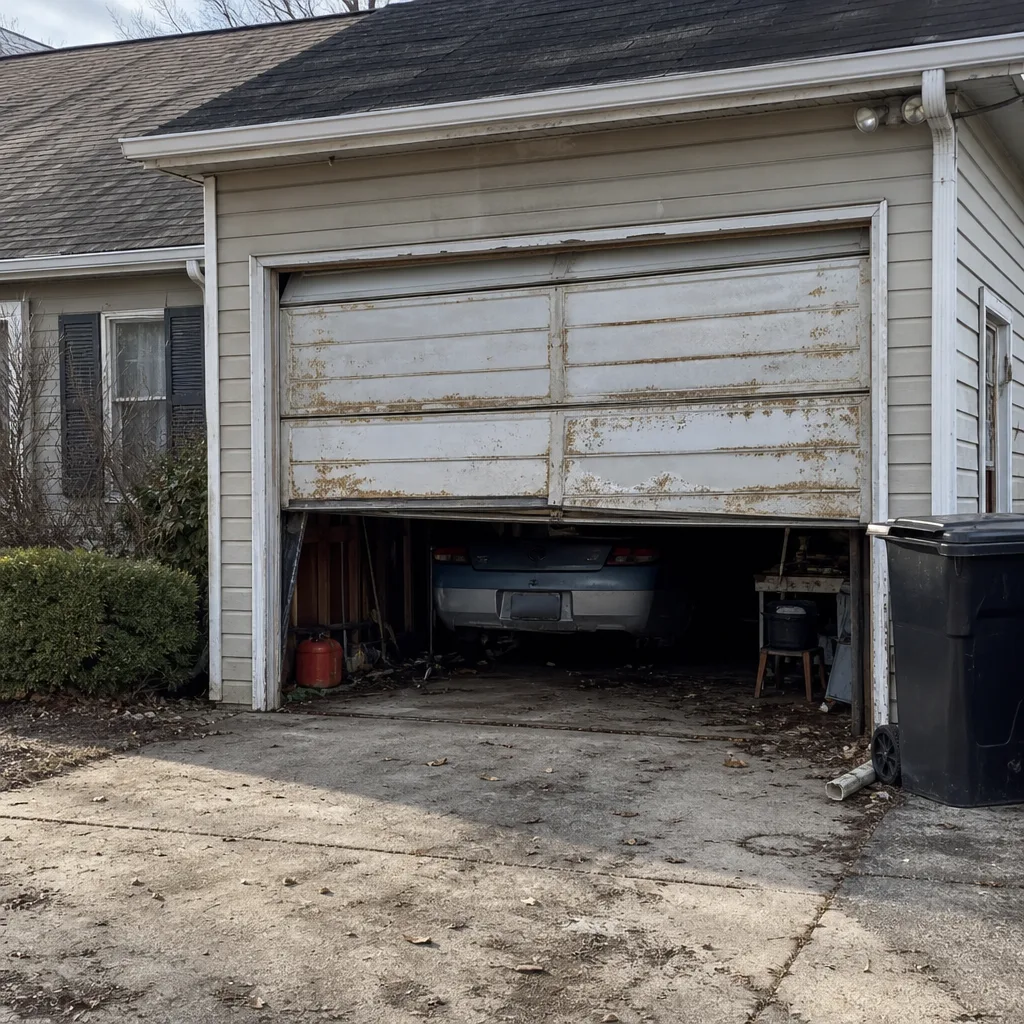
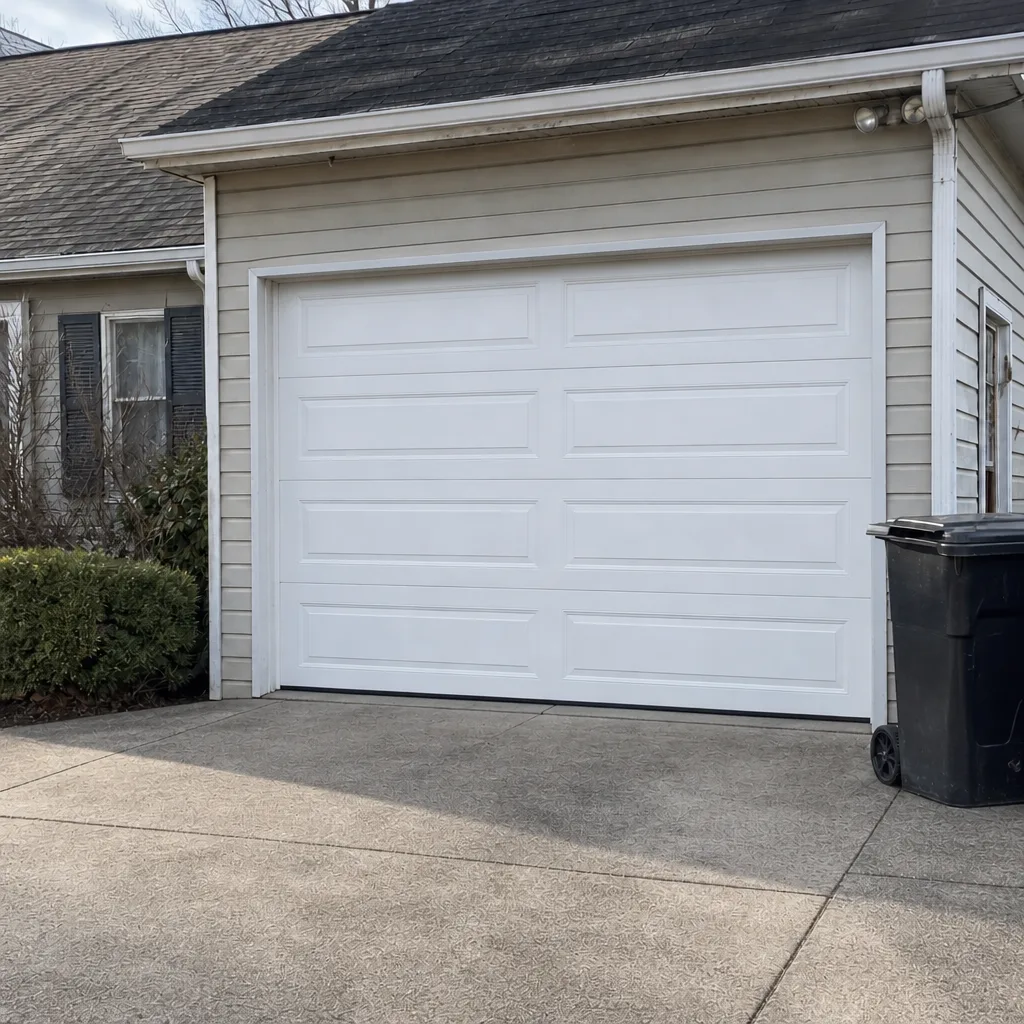
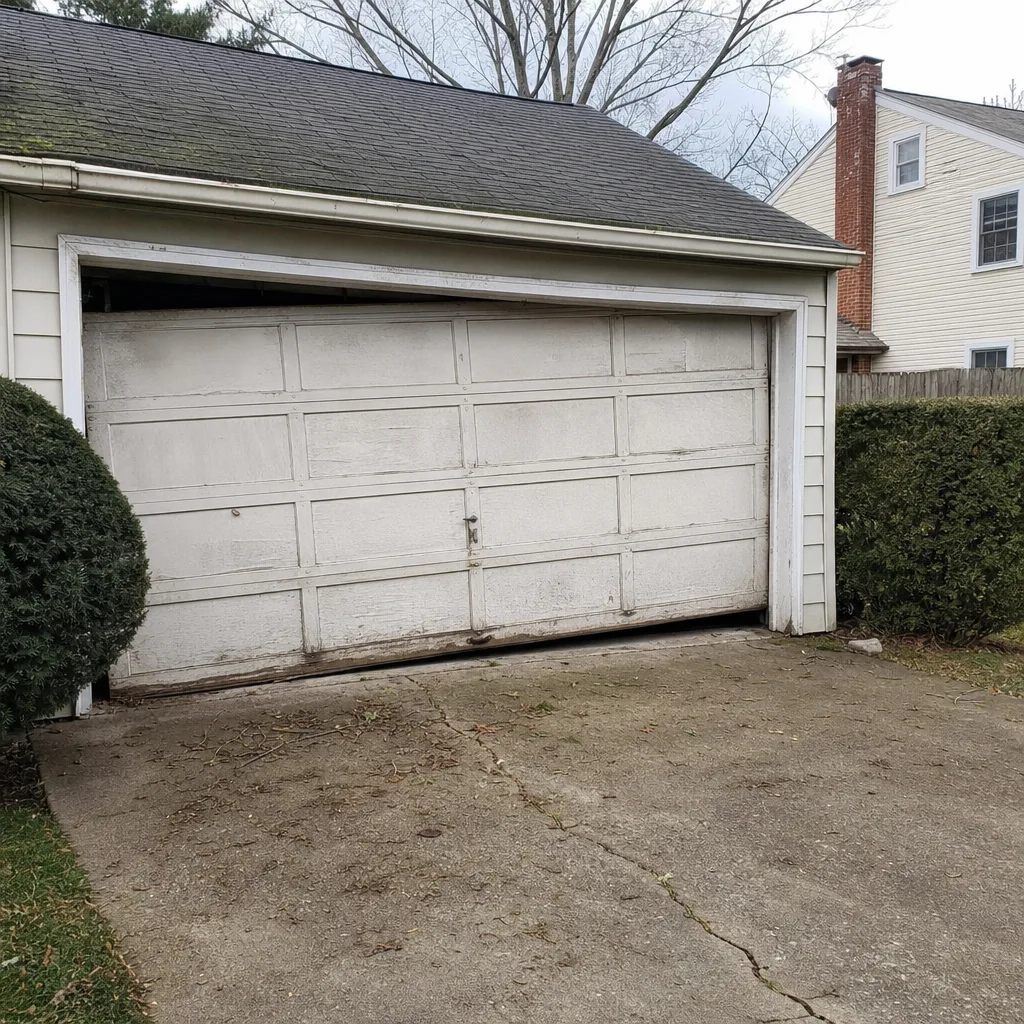
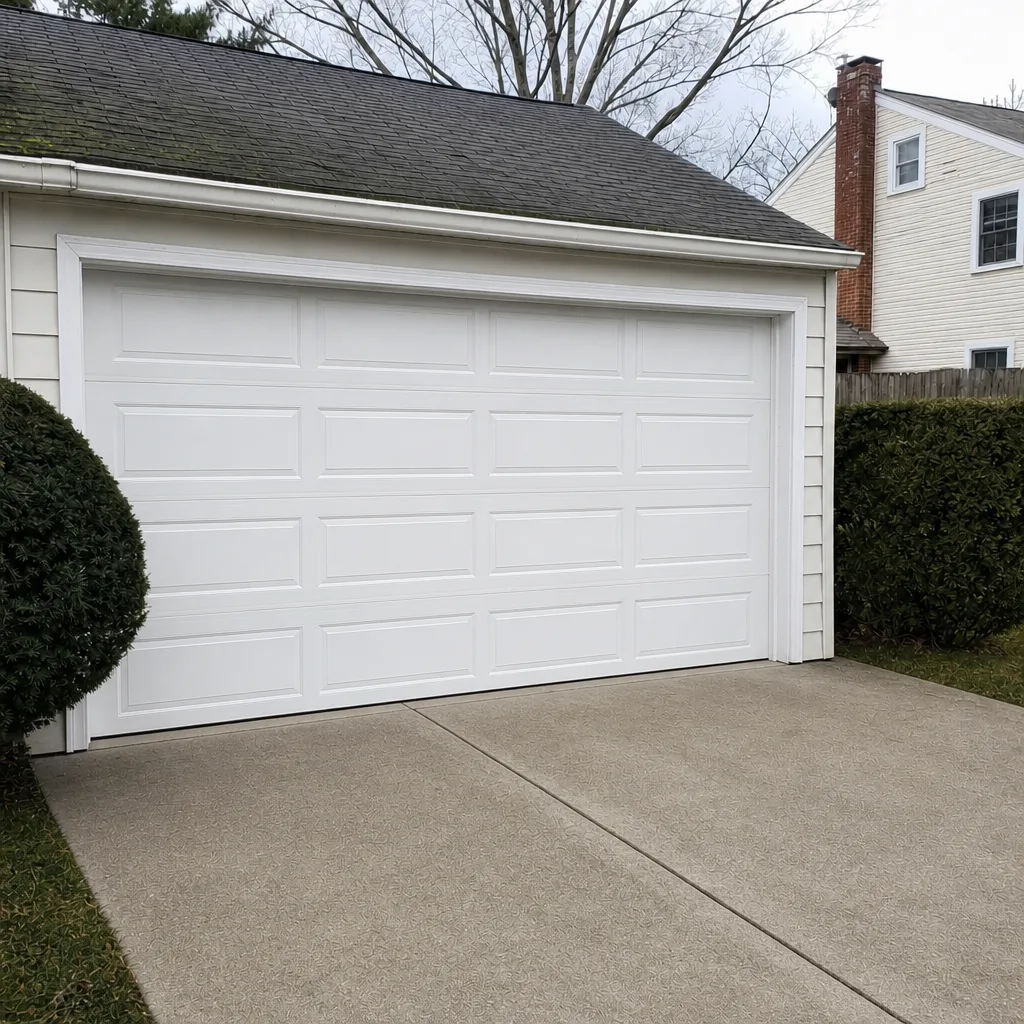
See the difference
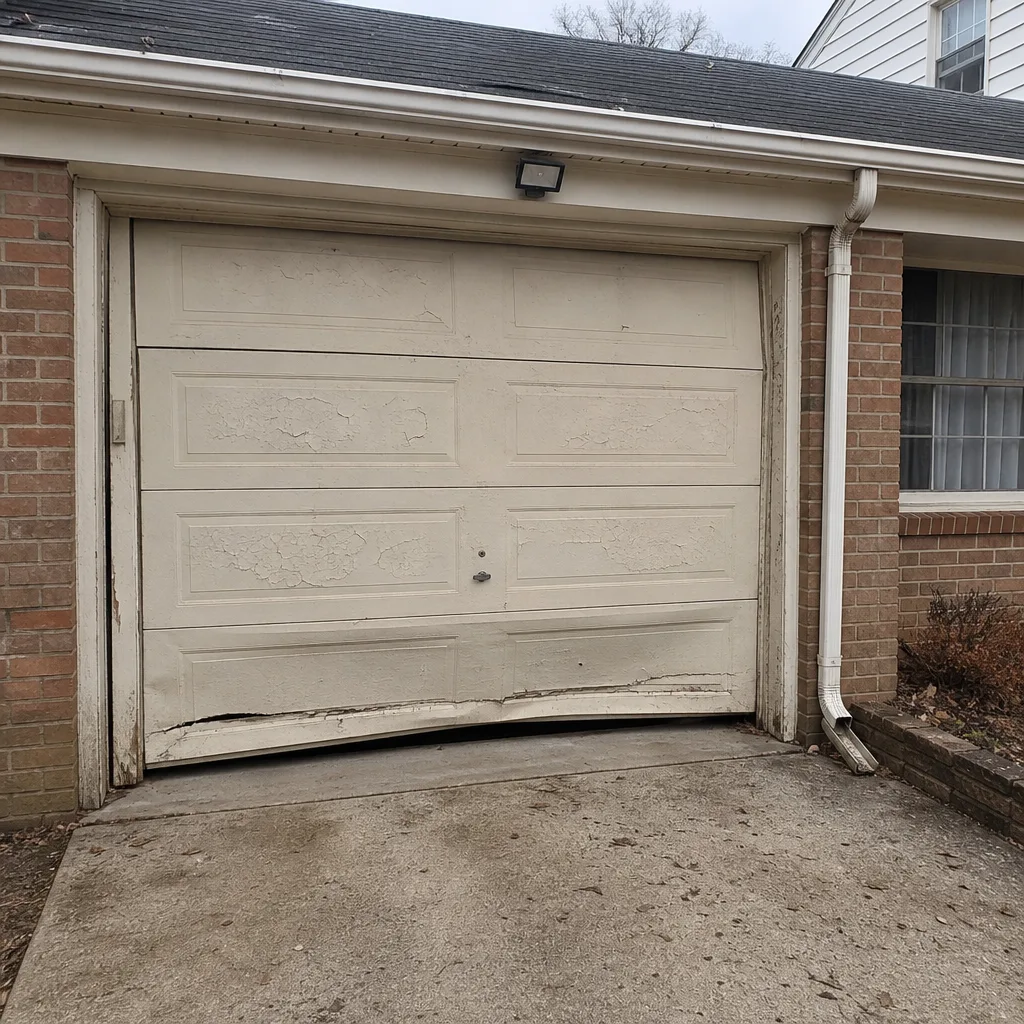 Before
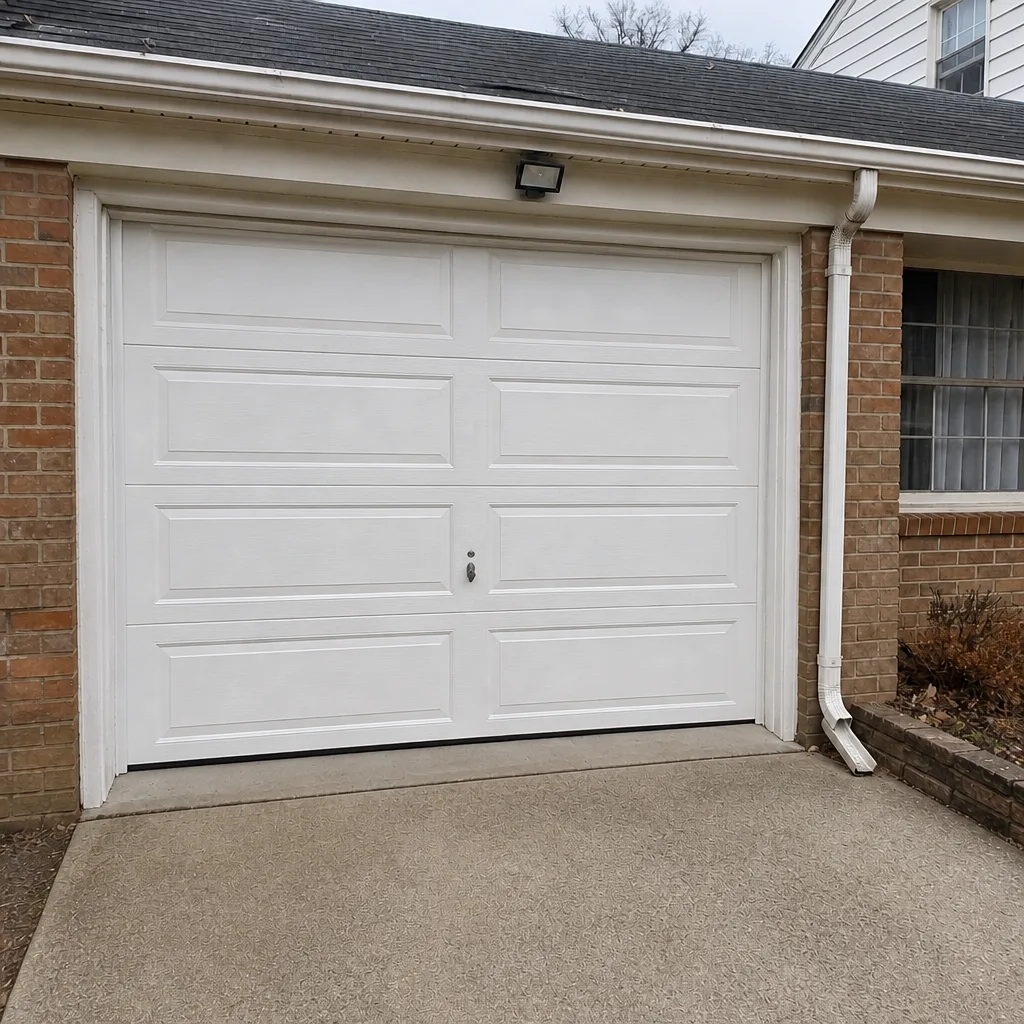 After
 Before
 After
 Before
 After
When to Call a Professional
Call a professional garage door technician in Washington if any of these describe your situation: the door is uneven at the bottom, the door won’t lift by hand after the opener is released, there’s a visible gap above the door, the door reverses immediately after starting to close with the sensors clean, the opener runs but the door doesn’t move, the door has come out of its track, you see a broken spring (a clear gap in the coil), a cable is loose or frayed, or the door has started making a new noise at any point in its cycle. Any of these indicates the job has crossed from maintenance into repair, and the risk-to-savings ratio has flipped. Stratford Garage Door Service offers free estimates in Washington – call (844) 372-0752.
Frequently Asked Questions
No, we strongly recommend against it. A torsion spring on a standard residential door stores 150 pounds or more of torque, and it’s under tension whenever the door is closed. The tools required for safe handling are not sold to homeowners at retail stores, and the failure mode on a mistake is serious injury. Call a licensed technician instead. Call (844) 372-0752 for a free estimate – we answer 24/7.
Usually not if you’re replacing a door into an existing opening with the same or similar weight and size, but it depends on the specifics of your home. Adding a new opener, enlarging an opening, or modifying a structural header does tend to require a permit. Ask the DC Department of Buildings and Permits directly for your address; getting the answer in writing before you start protects you at resale. Call (844) 372-0752 if you want us to walk through what we’d typically recommend.
Lubrication, safety sensor alignment, remote and keypad reprogramming, bottom weatherstrip seal replacement, and visual inspection. These are the tasks where a mistake ends in an inconvenience rather than an injury. Anything involving the springs, cables, tracks, or opener wiring is a professional job in Washington. Call (844) 372-0752 for a free estimate on anything past the DIY-safe list.
They don’t always – but the online parts are usually generic and often arrive the wrong size for a specific door. Door components like torsion springs need to match the door’s exact weight and current balance. Buying from a trade supplier specialized to garage doors means the part fits correctly, but those suppliers typically don’t sell to walk-in customers. The apparent savings from online orders disappear quickly when a wrong part needs returning. Call (844) 372-0752 for a free estimate and we’ll tell you what your door actually needs.
Most spring, opener, and cable repairs take a couple of hours when the parts are common and on the truck. Full door replacements are scheduled visits rather than same-day work, because the door needs to be measured and ordered. Call (844) 372-0752 for a free estimate and a clear answer on timing for your specific job.
Potentially, yes, if the work touched a structural component or required a permit that wasn’t obtained. DC title searches do flag open permits, and unresolved permits can delay a closing. Routine, non-structural repairs – seals, sensors, remotes – don’t create this issue. For anything structural or anything involving new electrical service, ask the DC Department of Buildings and Permits before you start. Call (844) 372-0752 with any question about whether a job requires a permit, and we can walk you through what we typically see.
The Bottom Line
The DIY-versus-professional question in Washington, DC comes down to three factors, not confidence. The first is torque: anything involving springs, cables, or the door’s balance system holds stored energy that makes mistakes genuinely dangerous. The second is code: DC permits and title search issues make structural and electrical changes worth checking before you start, not after. The third is time and true material cost: an attempt that includes three trips to the hardware store, a rented tool that doesn’t fit, and a part that arrives wrong frequently costs more than the price agreed before a technician begins. For routine maintenance, DIY is reasonable and we’ll cheer you on. For anything past the maintenance line, Stratford Garage Door Service is your specialist. We work with LiftMaster, Chamberlain, Genie, Clopay, Amarr, Wayne Dalton, Craftsman, and Raynor systems every week, and that brand fluency saves diagnostic time when a technician arrives. To learn more about what we do as a Stratford Garage Door Service garage door specialist, or to visit our main Washington area page, those are the right starting places. If your door is telling you something is wrong, call (844) 372-0752 for a free estimate. We answer 24/7. Fast dispatch from 7am to 7pm, Sunday through Friday.
Written by the team at Stratford Garage Door Service, serving Washington since 2015.