
Last updated November 14, 2026
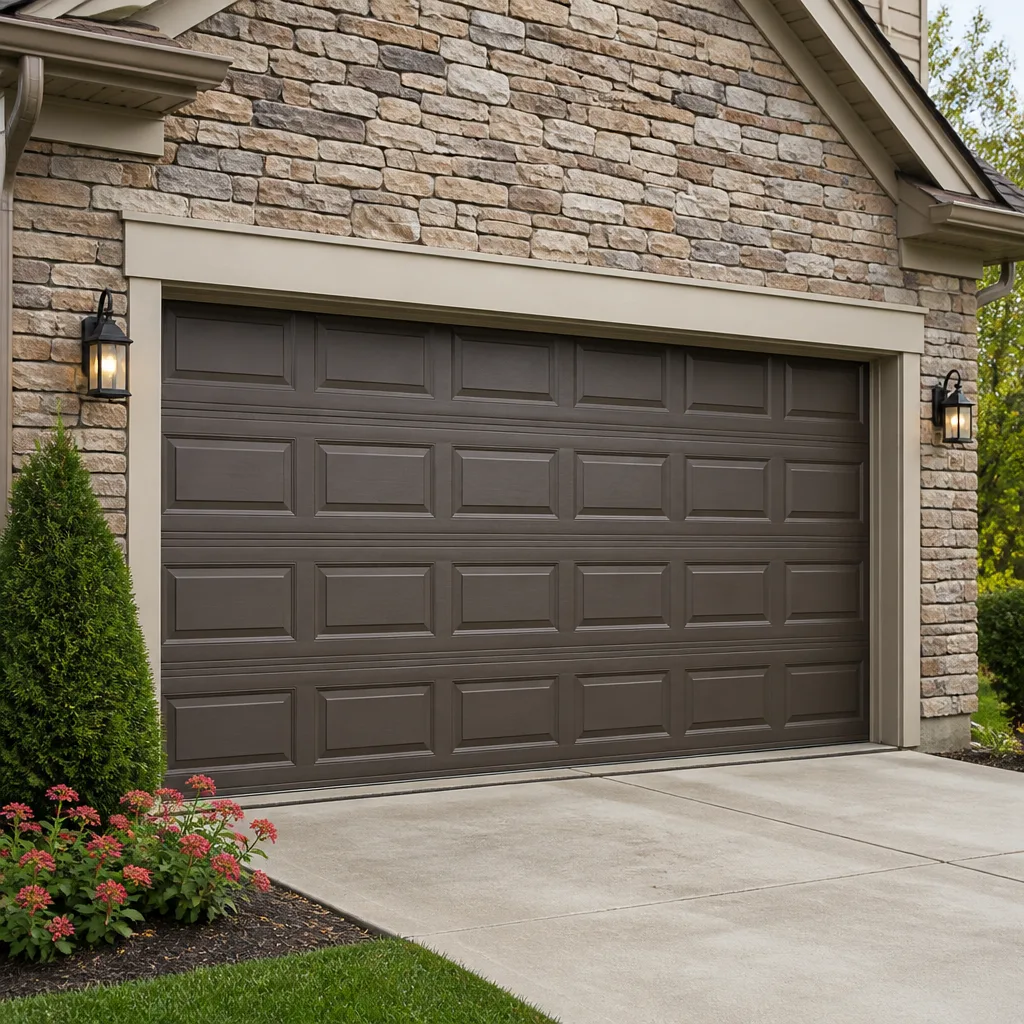 Raised-panel steel
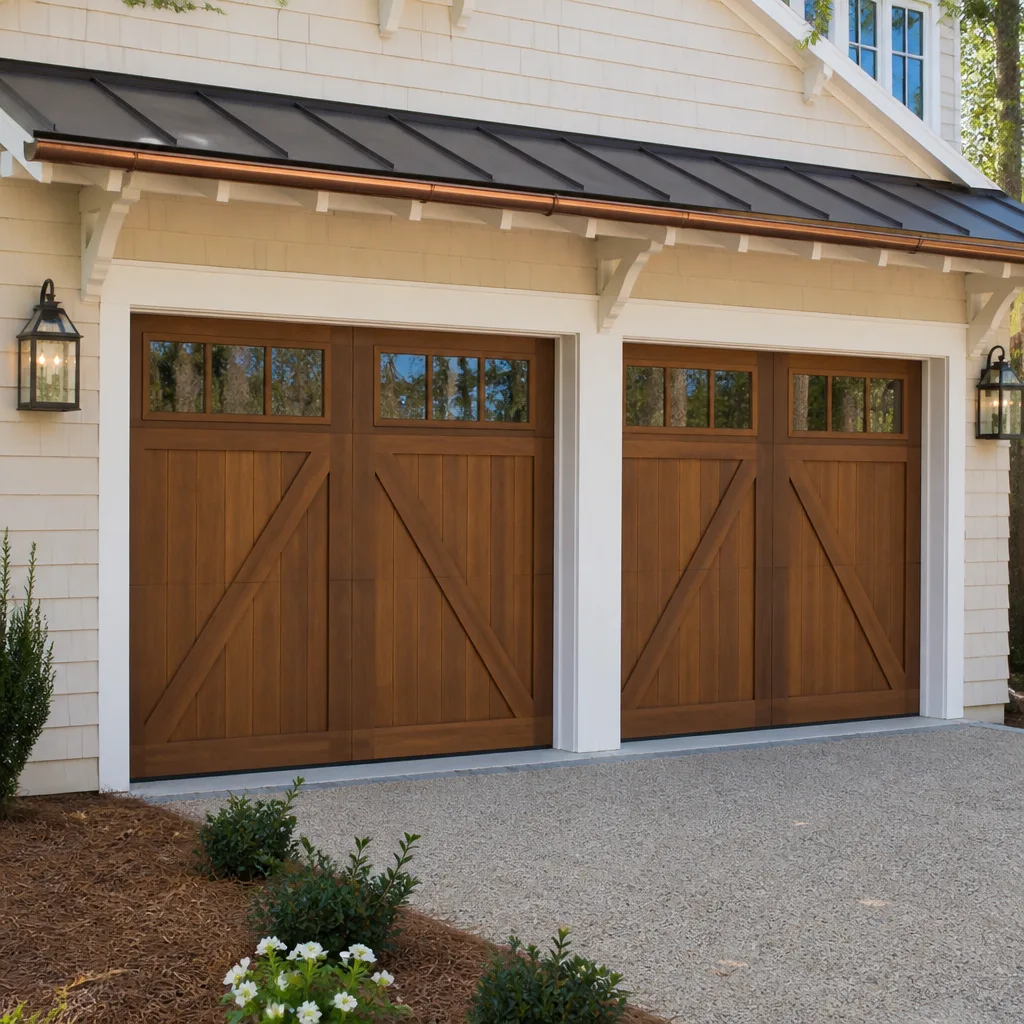 Carriage house
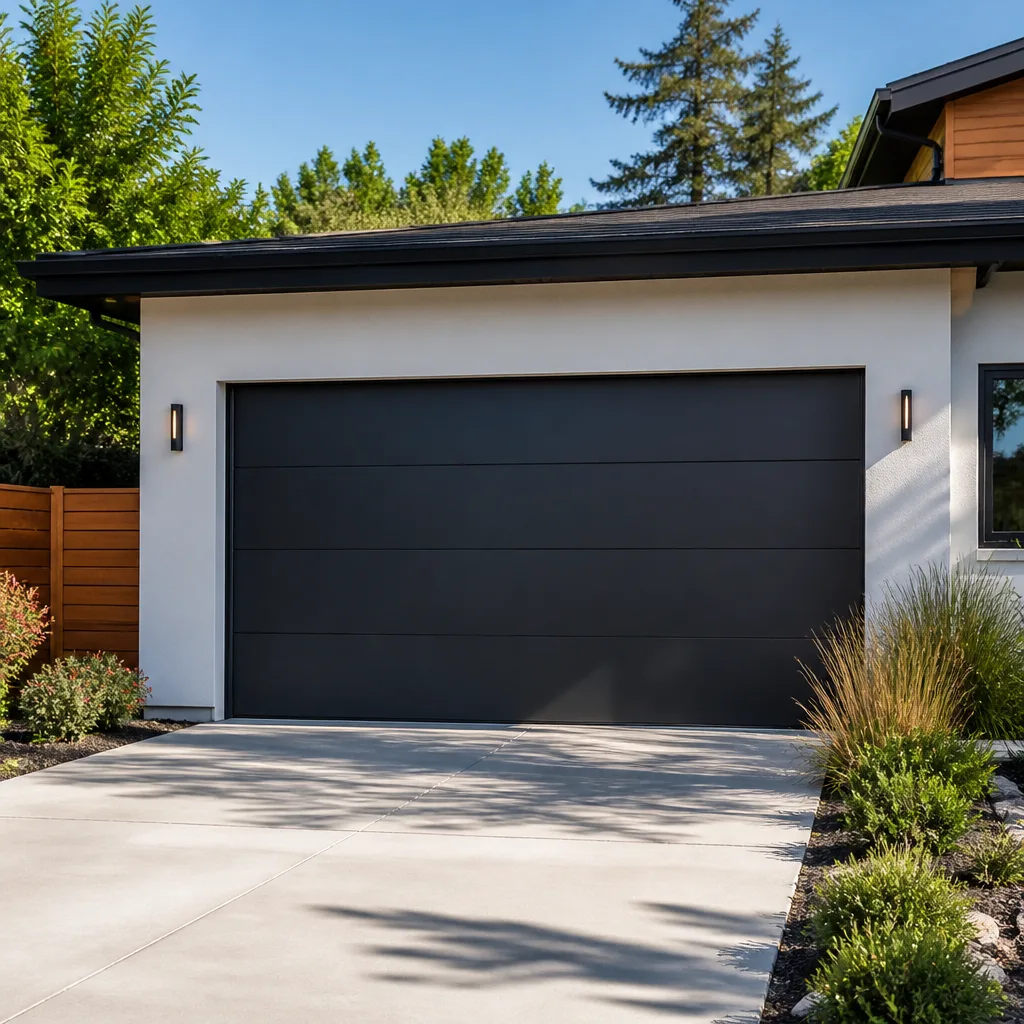 Modern flush
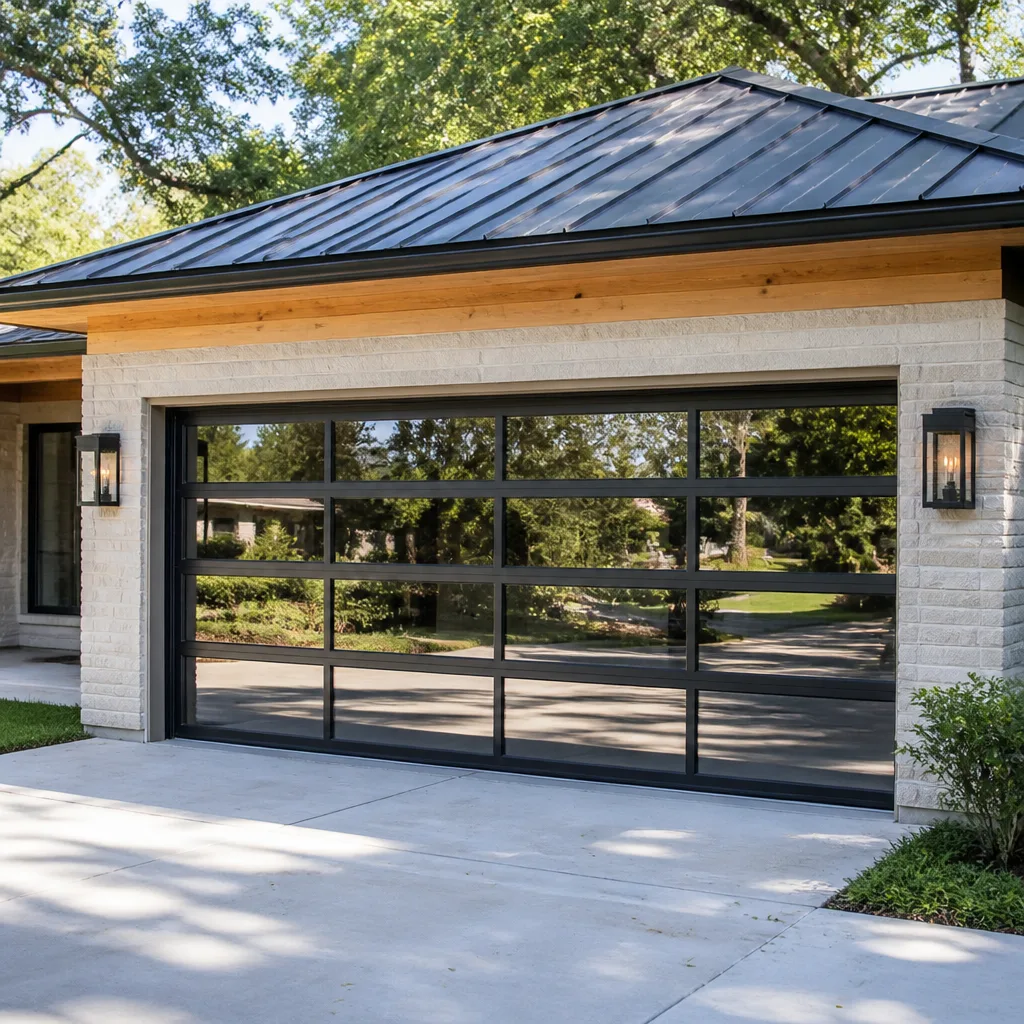 Full-view glass
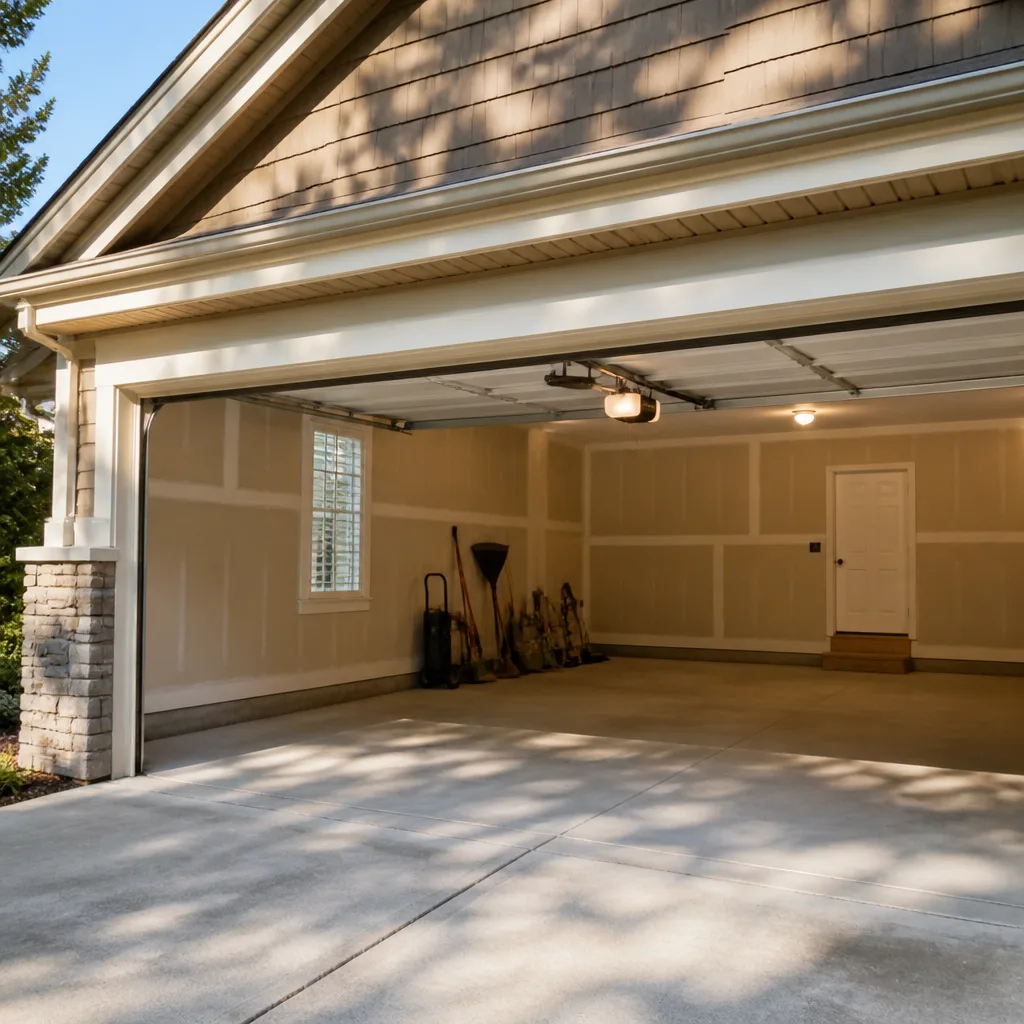 LiftMaster openers
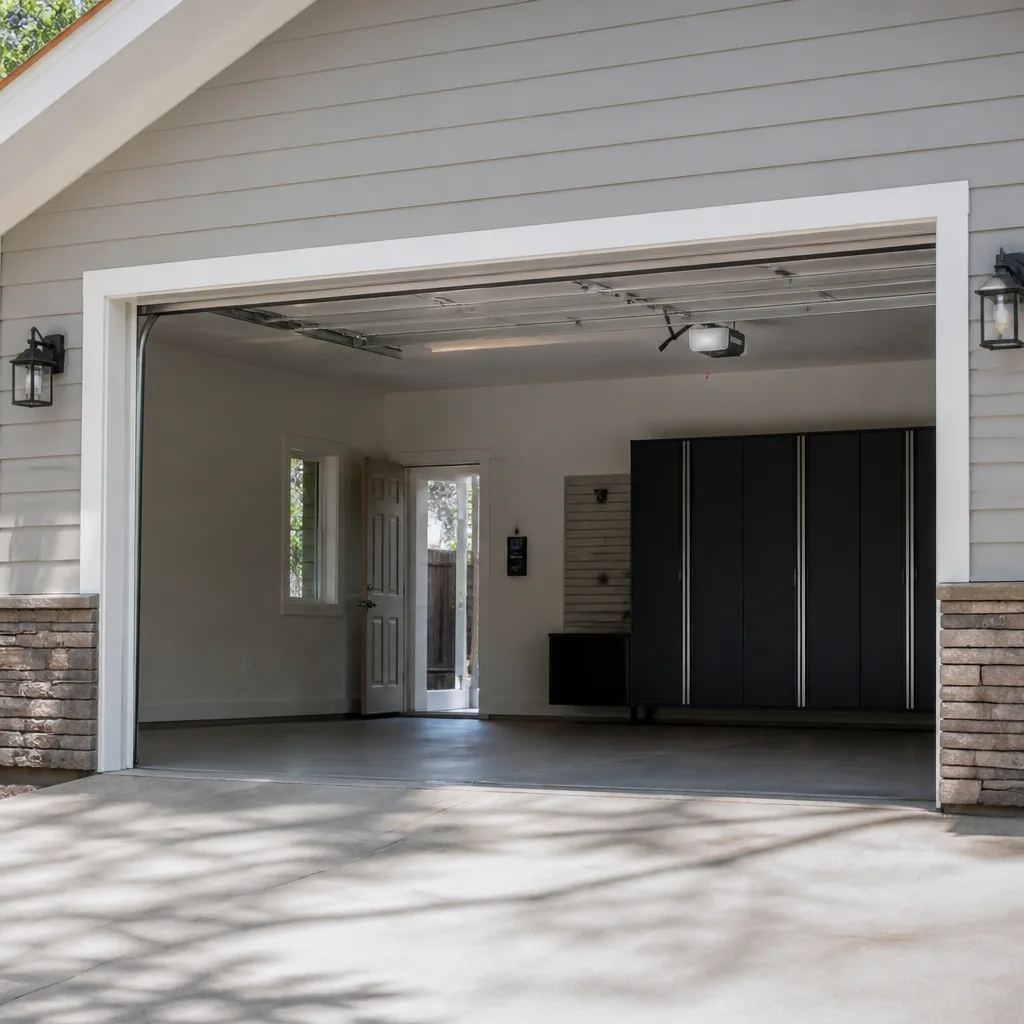 Chamberlain openers
Full 25-point door and opener safety check with every visit - springs, cables, rollers, tracks, and your LiftMaster or Chamberlain opener included
You get a price before we start. It does not change when the truck arrives.
Get your free estimateGarage Door Warning Signs: A Washington Homeowner’s Reference Guide
A garage door that takes two seconds longer to open than it did six months ago isn’t “slowing down with age.” It’s a motor working against a mechanical resistance problem, and left alone that resistance will burn out the opener long before the door itself fails. Most garage door problems in Washington don’t announce themselves with a bang. They arrive quietly: a new squeak, a slight hesitation at the halfway point, a door that won’t close all the way in cold weather. Homeowners get used to these sounds and tell themselves the door is just getting older. This guide teaches you to read those early signals, split them by urgency, and know the difference between what to watch and what to act on today.
Quick Answer
Garage door warning signs fall into three urgency tiers: things to monitor (squeaking, minor vibration, slow opening), things to schedule within 30 days (grinding, jerky movement, a door that reverses in cold weather, visible cable wear), and things that mean stop using the door and call immediately (a broken spring, a snapped cable, a door off its tracks, or any door that won’t stay up on its own). A balance test you can do by hand in half a minute will tell you more about spring wear than any visual inspection. When a door starts acting differently in Washington’s humid summers and freezing winters, that change is information, not personality.
Styles & brands we work with
- Raised-panel steel
- Carriage house
- Modern flush
- Full-view glass
- LiftMaster openers
- Chamberlain openers
Table of Contents
- Sounds That Mean Lubrication vs. Sounds That Mean Structure
- The 30-Second Balance Test That Reveals Spring Wear
- Why Your Door Reverses in Winter (It’s Usually Not the Safety Sensors)
- Rowhouse Alley Garages: Warning Signs Suburban Guides Miss
- What to Look For on the Door, Tracks, and Hardware
- Opener Warning Signs: When the Motor Is the Problem
- The Three-Tier Urgency Classification
Sounds That Mean Lubrication vs. Sounds That Mean Structure
Every garage door makes noise, and not all of it deserves a phone call. The trick is separating the sounds that live in the hinges and rollers from the sounds that live in the springs, cables, and panels. Grinding and squeaking belong to the first group. Popping, banging, and rattling cables belong to the second, and those are the ones that warrant attention before something fails.
Here’s how to tell them apart:
- Squeaking or high-pitched whining usually comes from dry hinges, rollers, or the torsion bar. This is a lubrication issue. It’s not urgent, but it’s a good excuse to have the moving parts checked before the wear adds up.
- Grinding or scraping often points to rollers that have worn flat or a door that’s riding against a track. Still in the monitor-to-schedule range, but worth a look because the friction loads the opener.
- Popping or a loud snap from the torsion bar area is the sound of a spring winding down or about to fail. Stop using the door and call. A torsion spring that pops can do serious damage to anything in its path, and it will not repair itself.
- Banging or rattling from the sides of the door often means a loose cable or a bracket that has worked free. A slack or tangled cable can whip when it lets go, so treat it as a stop-use situation.
We hear the same pattern in Washington neighborhoods over and over: the squeak starts in spring, nobody minds it, and by the following winter the door is grinding through its whole cycle. Catching that first sound matters because lubrication is cheap and a failed opener is not. If you’re already hearing something that isn’t just a squeak, our garage door repair service covers the full system, from rollers to springs.
The 30-Second Balance Test That Reveals Spring Wear
A garage door’s springs carry the door’s weight, and when they lose tension the door gets heavy without looking any different. The balance test is the fastest way to find out whether your springs are still doing their job, and you can do it by hand. Do it when the door is fully closed and nobody is standing under it.
- Disconnect the opener. Pull the emergency release cord so the door runs on its tracks alone.
- Lift the door by hand to about waist height and stop. If the door stays put, your springs are balanced. If it sags back down or drops, they’ve lost tension.
- Raise the door to about halfway and let go. A well-balanced door holds that position. A door that falls means the springs are wearing.
- Reconnect the opener by pushing the trolley back into the carriage until it clicks.
If the door feels unusually heavy at any point, stop. A garage door can weigh a few hundred pounds, and lifting one with tired springs is how people get hurt. The balance test is diagnostic, not a repair, and it’s a test we recommend repeating each season. In Washington, where summer humidity swells wood and freezing winters stiffen everything else, a door that tested fine in June can feel different by December.
Springs are also the component we will not tell you to touch. Torsion springs are under high tension and can injure or kill someone who tries to adjust them without the right tools and training. That’s a job for a trained technician, every time. If your balance test fails, call (844) 372-0752 and we’ll come take a look.
Why Your Door Reverses in Winter (It’s Usually Not the Safety Sensors)
A door that reverses unexpectedly in cold weather is one of the most misdiagnosed problems in the trade. Homeowners assume the safety sensors have gone bad and replace them. That’s rarely the fix. The safety sensors themselves are usually fine. What’s changing in winter is the door’s travel, and that shifted travel trips the opener’s logic.
Two common culprits:
- Limit switch adjustment. The opener’s limit switches tell the motor where the door should stop on the way down. Cold shrinks metal and wood, the door sits slightly differently in its tracks, and the motor runs past its expected stop. The opener reads that as an obstruction and reverses. Adjusting the limits usually solves it.
- Sensor alignment. The two photo-eye sensors at the bottom of the door need a clear, straight line between them. If cold weather shifts a bracket by a fraction, or the sun hits a lens at a certain angle, the opener loses the beam and reverses. A realignment is often all it takes.
The right diagnosis depends on whether the door reverses on the way up or on the way down, and whether it reverses at the same spot every time. That’s why a quick look by a technician usually finds the answer faster than trial and error. Our garage door opener repair team works on Genie and LiftMaster units across Washington and knows the specific reversal quirks of each line. If your door reverses several times in a row, stop using it and call. Repeated reversing wears out the opener’s gears.
Rowhouse Alley Garages: Warning Signs Suburban Guides Miss
Most garage door advice is written for suburban driveways where a door sits on a flat, isolated slab. Washington’s rowhouse alley garages are a different animal. They’re built tight against neighboring structures, often set on older foundations, and the doors are smaller, heavier, and asked to do more in less space. The warning signs that matter here are different ones.
The biggest is track alignment drift. When the ground under a rowhouse garage settles or shifts, as it does across much of Washington’s older residential blocks, the door’s tracks move with it. The door doesn’t fail immediately. It just starts riding a little differently, and one side of the track pulls away from the jamb. Watch for these clues:
- Gaps opening between the track and the wall or jamb, especially after a wet season.
- The door rubbing on one side as it travels, or a panel that looks cocked when the door is halfway down.
- Hinges and rollers on one side wearing much faster than the other.
- Water pooling or staining at the base of the door, which signals ground movement underneath.
In our experience, a door that suddenly starts sticking in an alley garage usually isn’t a door problem at all. It’s a building and ground problem that has reached the door. That matters because the fix is track adjustment, not replacement, and knowing which you’re looking at saves you from buying a door you don’t need. If your tracks have moved, call (844) 372-0752 and we’ll take a look.
What to Look For on the Door, Tracks, and Hardware
Some warning signs are visible if you know where to look. Run through this list once a season, using a flashlight and staying on the ground.
- Cables: Look at the steel cables on both sides of the door. Any fraying, kinks, or slack means the cable is wearing or has come off a drum. Stop using the door.
- Springs: A torsion spring with a visible gap or a broken end is done. Extension springs should have a safety cable running through them. If yours don’t, have that addressed before anything else.
- Panels: Small dents are cosmetic. Cracks, separation between panels, or a door that bows in the middle are structural, and a bent door puts extra load on the opener.
- Hinges and brackets: Loose screws are common and easy to spot. A bracket pulling out of the door is not; that’s a stop-use sign.
- Rollers: Worn rollers are flat rather than round, and the door will rumble as they pass. That’s a schedule-it item, not a stop-use one.
- Weather seal: A cracked or missing bottom seal lets in water and pests. That’s the least urgent item on this list but worth fixing before it damages the door’s bottom panel.
If you’re reading this and realizing your door’s visual inspection is overdue, that’s the most useful thing this guide can do. Our Stratford Garage Door Service team does this kind of check on every call, and the visual defects we find are usually cheaper to fix than the failures they cause if ignored.
Opener Warning Signs: When the Motor Is the Problem
Not every warning sign belongs to the door. Some belong to the opener, and it’s worth learning the difference because the fix is different. The door and opener are a system, but they fail in recognizable ways, and a technician who knows the brand can usually tell which side the problem lives on before touching anything.
Here’s the short version:
- Lights flicker or the opener resets itself. This is usually a logic board or power issue, not a door issue. Unit-specific quirks matter here. A LiftMaster board handles a power problem differently than a Craftsman unit does.
- The opener runs but the door doesn’t move. Look at the carriage and trolley first. A disconnected trolley is a common and easy fix.
- The opener struggles and the door moves slowly. Usually the door is the problem, not the opener. Springs, rollers, and track alignment all put drag on the motor, and the motor is just reporting it.
- The remote works only when you’re close. Often a battery or antenna issue, but on older units it can point to a failing receiver.
This is where knowing the equipment matters. A Raynor opener and a LiftMaster opener can show the same symptom for different reasons, and the fix that works on one can make the other worse. We specialize exclusively in garage doors, so we already know the failure patterns of the brands we work on before we arrive. If your opener is acting out of character, call (844) 372-0752.
The Three-Tier Urgency Classification
Every warning sign on this page lands in one of three buckets. Use this list to decide what to do about what you’re hearing or seeing, and when to stop guessing.
Tier 1: Monitor it. Slight squeaking, minor vibration, a slow-opening door, a worn weather seal, or a remote that needs a fresh battery. These are real but not urgent. Note them, watch for changes, and bring them up at your next service call.
Tier 2: Schedule it within 30 days. Grinding, jerky movement, a door that reverses in cold weather, worn rollers, a loose hinge, or a balance test that’s just starting to fail. These are things that get worse with use, and 30 days is the window between a cheap fix and a bigger repair.
Tier 3: Stop using the door and call today. A snapped spring, a broken or tangled cable, a door off its tracks, a bent or cracked panel, or any door that won’t stay up on its own. This tier is not negotiable. Using a door in this condition risks injury and can turn a repair into a replacement.
In Washington, most Tier 2 problems get noticed in late fall, when the first cold snap changes how the door behaves. Don’t wait for the first freeze to schedule a repair. Call (844) 372-0752. We answer 24/7. Fast dispatch from 7am to 7pm, Sunday through Friday. A call outside dispatch hours is booked into the next opening, Sunday through Friday, 7am to 7pm.
Common Mistakes to Avoid
- Treating a noisy door as a “getting older” problem. Noise is information. The door isn’t aging, it’s wearing, and the two have different fixes.
- Greasing a broken spring and hoping for the best. Lubrication doesn’t fix tension. If the balance test fails, the spring needs serious attention and should never be adjusted by hand.
- Replacing safety sensors to fix a cold-weather reversal. The sensors are rarely the cause. Diagnose the limit switch and alignment before replacing anything.
- Assuming a track problem in an alley garage is a door problem. In Washington’s older rowhouse blocks, settling shifts the tracks. Fix the alignment, don’t buy a new door.
- Using a door that fails the balance test. That’s Tier 3. Every open cycle loads the opener, and the most expensive fix on this page is the one that starts with a worn spring and ends with a burned-out motor.
- Mismatching the opener and the door. A budget opener paired with a heavy door is one of the most common reasons a motor fails early. Match the two to each other.
- Waiting for a warning sign to become an emergency. The whole point of monitoring is to act before the stop-use tier arrives, and in Washington the winter cold will always find the weak point first.
See the difference
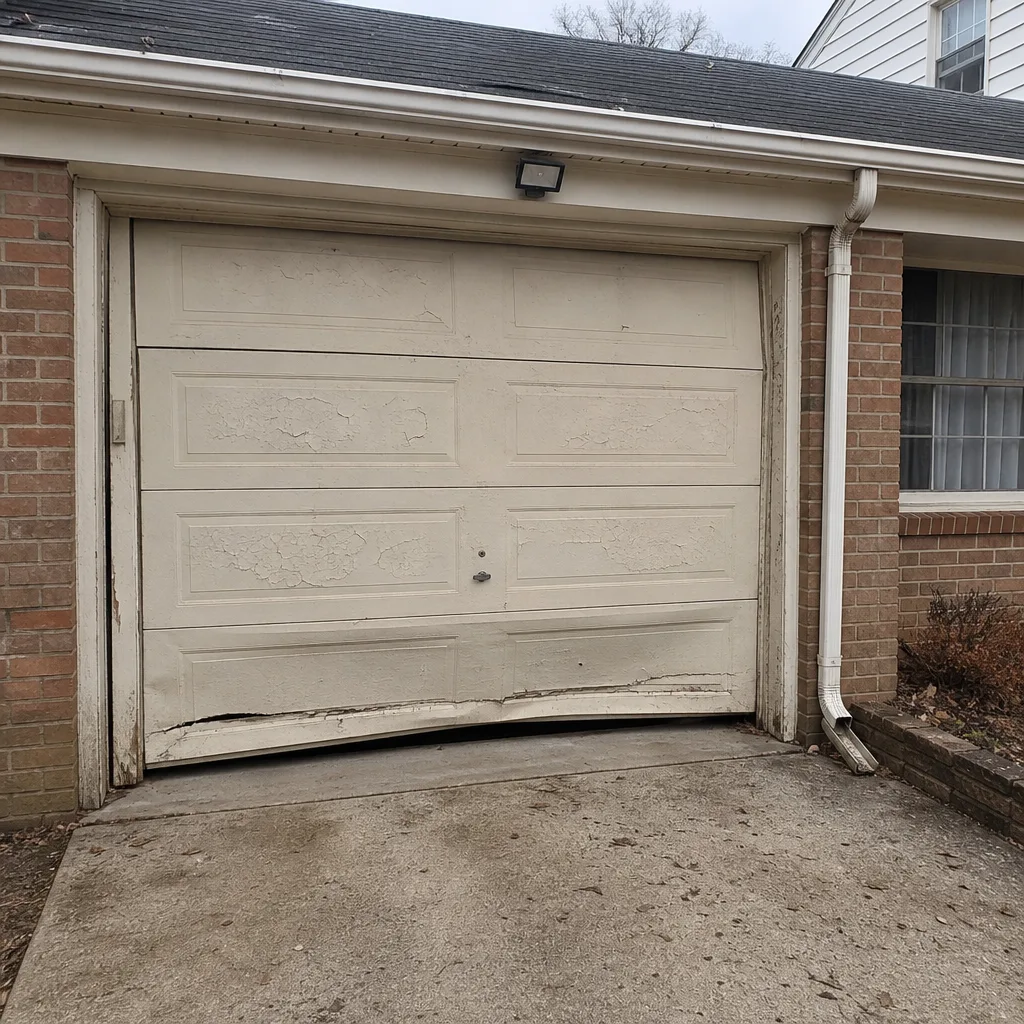 Before
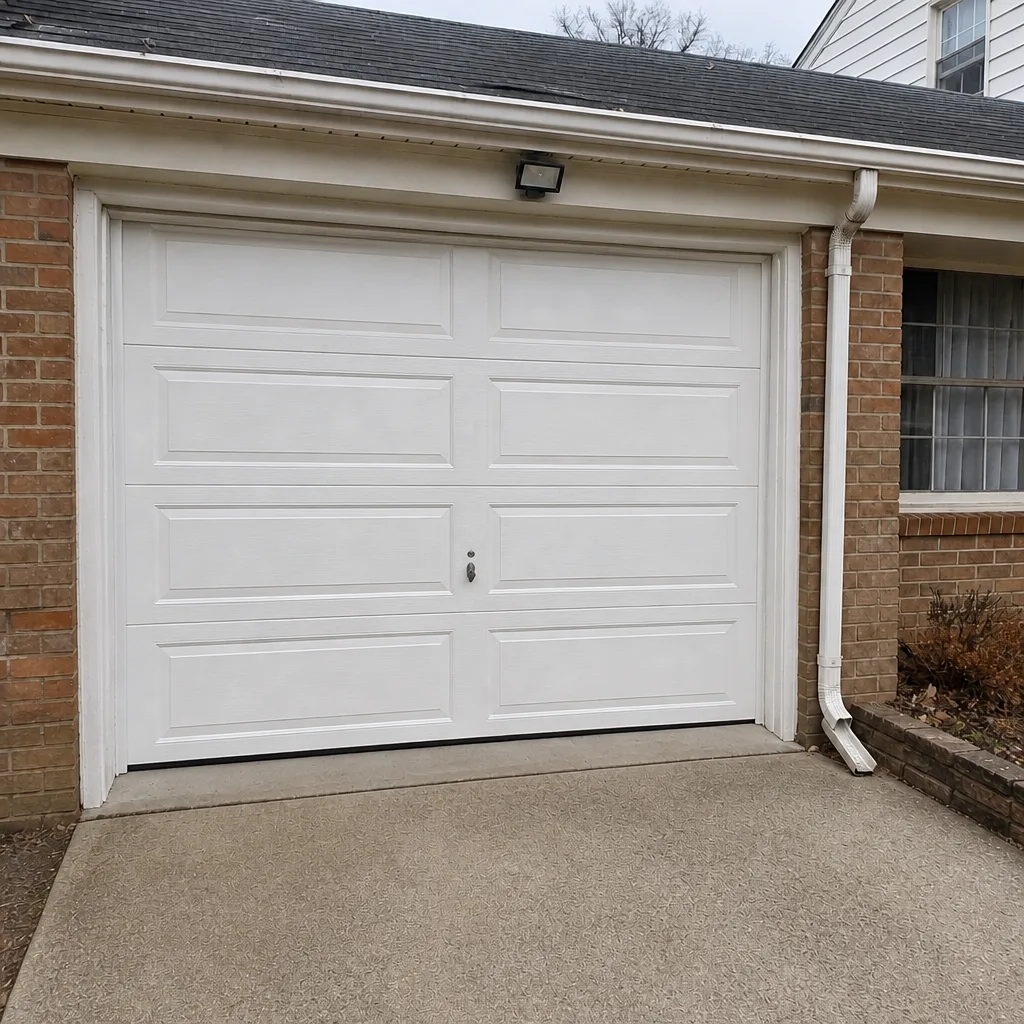 After
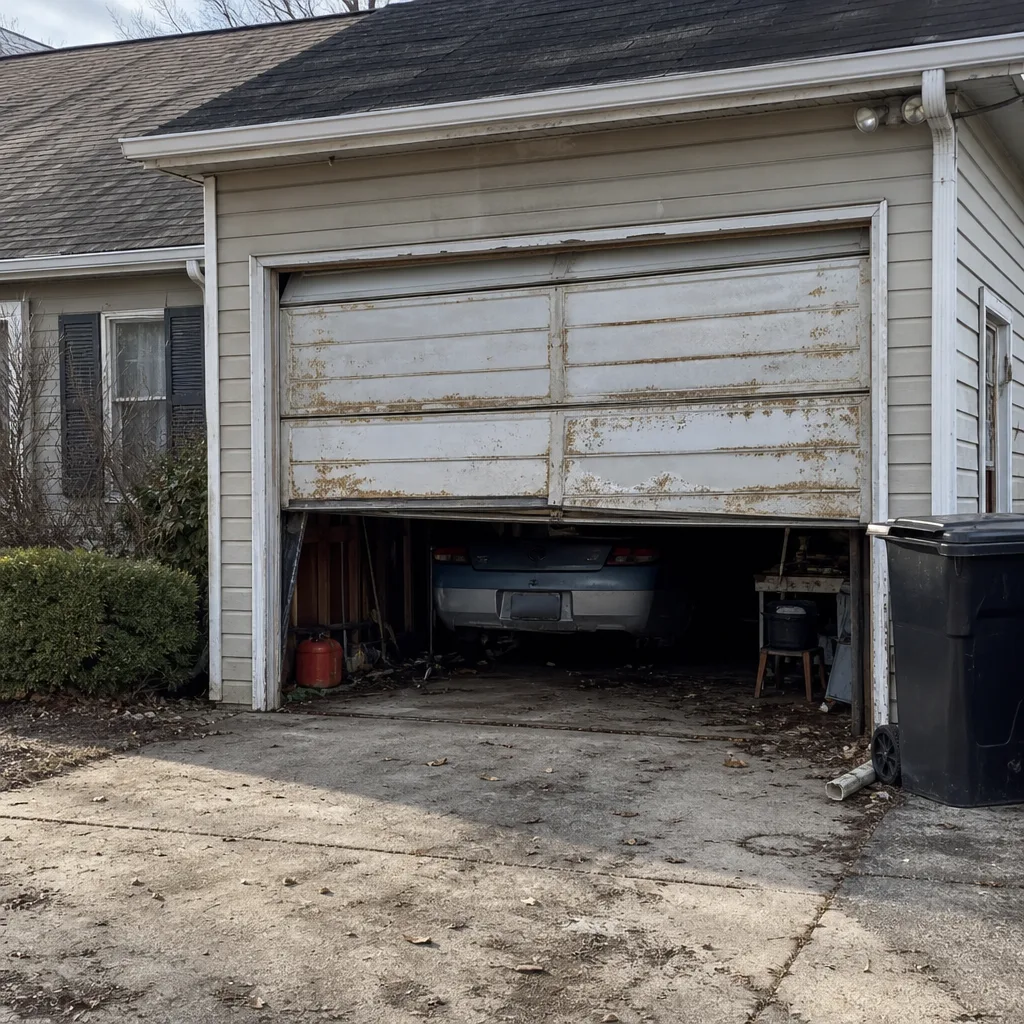 Before
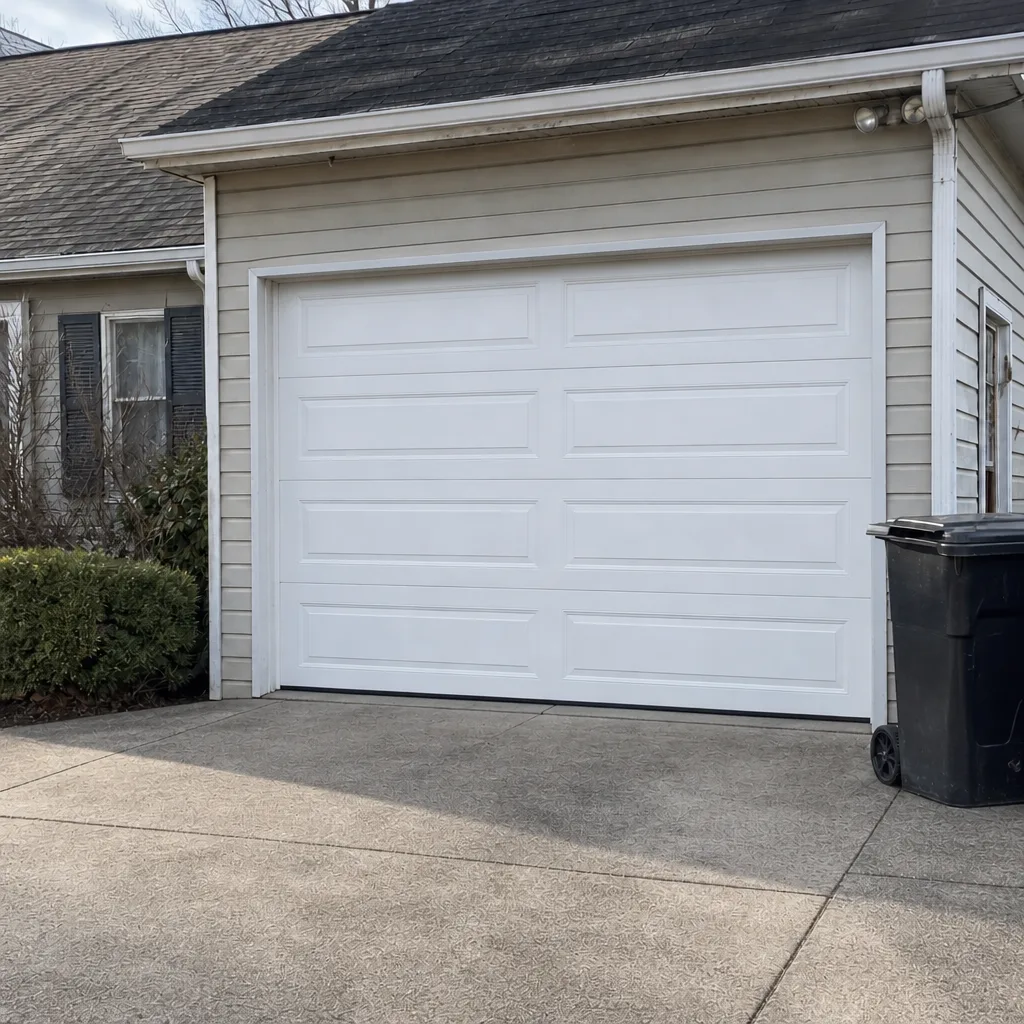 After
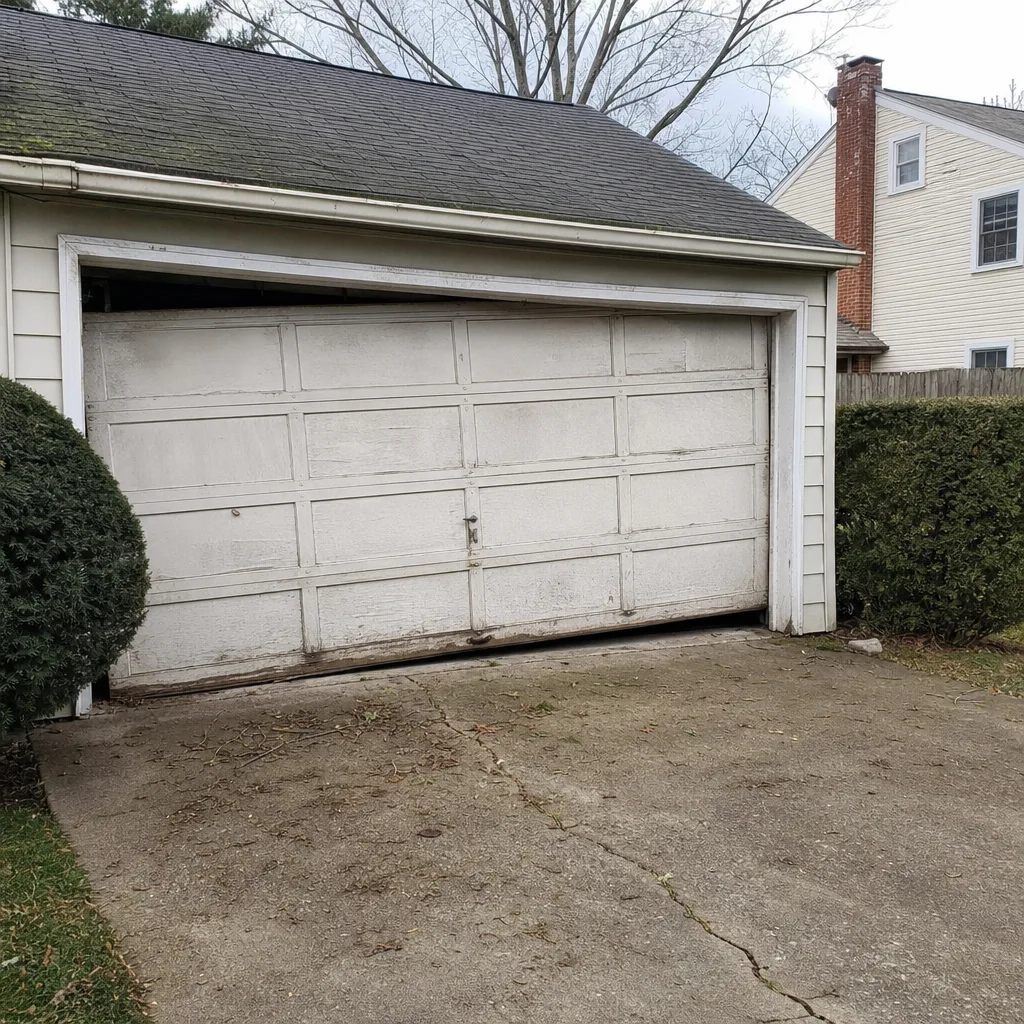 Before
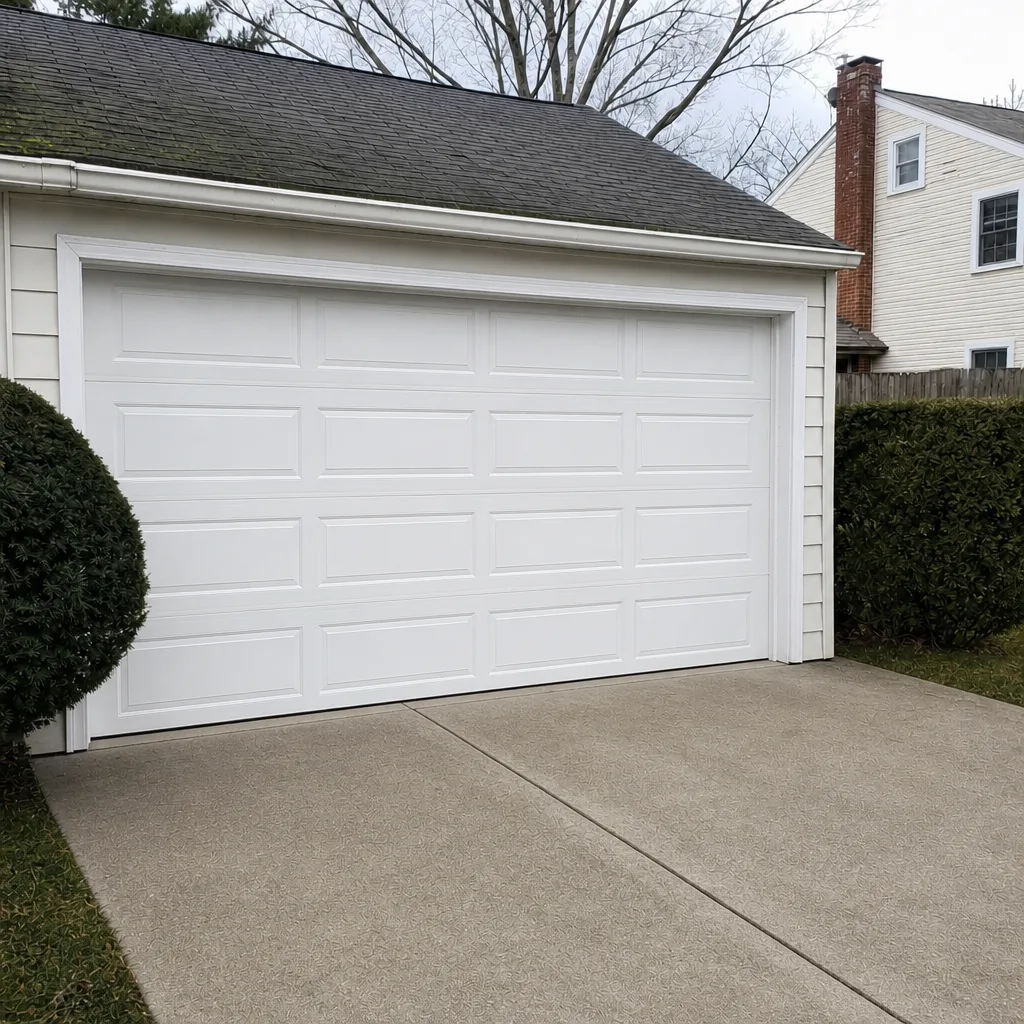 After
When to Call a Professional
Call a professional when the warning sign involves a spring, a cable, a track that has moved, a door that won’t stay up, or a balance test that fails. Springs and cables store energy, and the wrong adjustment can injure you or damage the door in seconds. Call if you can’t tell whether a sound is lubrication or structure, or if your opener is failing in ways a battery change hasn’t fixed. And call if you simply want an expert’s eyes on a door you rely on every day. Stratford Garage Door Service offers free estimates in Washington. Call (844) 372-0752. We answer 24/7. Fast dispatch from 7am to 7pm, Sunday through Friday. Same-day repair is available. The price is quoted and agreed before any work starts, and the written estimate sets the final price.
Frequently Asked Questions
Slower opening and a failing balance test are the earliest reliable signals. A door that takes longer to open than it did a few months ago is usually fighting resistance from springs or rollers, and that resistance will wear out the opener. Test the balance by hand, and if the door doesn’t hold its position, schedule service.
No. Torsion springs and their cables are under high tension and can injure or kill someone who tries to adjust or replace them without training and the right tools. Treat a broken spring as a stop-use situation and call a professional.
Cold weather changes the door’s travel, and the opener reads that as an obstruction. The limit switches and sensor alignment are the usual culprits, not the sensors themselves. A technician can adjust the limits and alignment, and that usually solves it. Call (844) 372-0752 – estimates are free.
Once a season, and any time the door starts acting differently. In Washington, check in late fall and early spring, when the temperature swings most. The test takes 30 seconds and costs nothing. If it fails, that’s your signal to call.
It depends on the noise. Squeaking and grinding point to lubrication or worn rollers, which are monitor-and-schedule items. Popping, banging, or rattling cables are stop-use signs, and the difference matters. If you’re not sure which you’re hearing, call and describe it.
Very likely. We work on the major residential brands, including LiftMaster, Chamberlain, Genie, Craftsman, and Raynor, and we know the specific failure patterns of each. Tell us the brand and model when you call (844) 372-0752, and we’ll come prepared.
The Bottom Line
Garage door problems don’t announce themselves. They arrive as a new squeak, a slight hesitation, a door that reverses in cold weather, or a track that has quietly shifted on a settling rowhouse foundation. Test the balance once a season. Know the difference between lubrication sounds and structural ones. Treat a broken spring, a snapped cable, or a door that won’t stay up as a stop-use situation, every time. For Washington homeowners, the value of this guide is timing: acting in the monitor tier is cheap, and acting in the stop-use tier is not.
If you’re reading this because something on your door changed and you can’t tell how serious it is, call (844) 372-0752. We answer 24/7. Fast dispatch from 7am to 7pm, Sunday through Friday. Estimates are free, the price is quoted and agreed before any work starts, and the written estimate sets the final price.
Written by the team at Stratford Garage Door Service, serving Washington since 2015.